How Does an Engine Cooling System Work?
Published
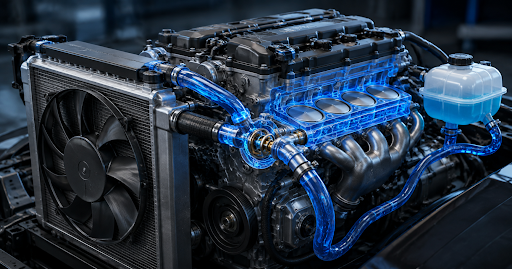
A car's engine cooling system works by circulating coolant through the engine to absorb combustion heat, then passing it through the radiator, where airflow releases that heat into the outside air. A water pump keeps the coolant circulating, while the thermostat regulates coolant flow to help maintain the engine's designed operating temperature, commonly around 90°C to 105°C in many modern cars. If a critical part of that cooling loop fails, the engine can overheat quickly.
Dubai's summer asphalt regularly hits 60 to 70°C, and cabin temperatures inside a parked car can cross 70°C within minutes. A healthy system helps prevent overheating, blown head gaskets, warped cylinder heads, and other costly engine damage. Yet most drivers only think about it once the temperature needle creeps toward red.
At Caroto Repair Dubai, our technicians regularly inspect radiators, water pumps, thermostats, coolant leaks, and other cooling-system issues across different vehicle makes. This guide explains how the system works, the role of each major component, common failure signs, and why proper cooling-system maintenance is especially important for Dubai drivers.
What Does an Engine Cooling System Actually Do?
Every time your engine burns fuel, combustion generates heat that can exceed 900°C inside the cylinders. Left unmanaged, that heat would warp metal, melt seals, and destroy your engine within minutes. The cooling system's job is to pull that excess heat away from the engine block and release it into the outside air, while keeping the engine at its ideal operating temperature, typically between 90°C and 105°C.
Running too cold is almost as harmful as running too hot. A cold engine burns fuel inefficiently, wears out faster, and produces more emissions. So the cooling system has two jobs, not one: bring the engine up to operating temperature quickly, then hold it steady no matter how hard you're driving or how hot it is outside.
The Main Components and How They Work Together
A modern liquid-cooled engine relies on six core parts working in a continuous loop.
1. Coolant (Antifreeze)
Coolant is a mixture of water and ethylene or propylene glycol, usually in a 50/50 ratio. It absorbs heat more efficiently than plain water, resists boiling at high temperatures, and prevents freezing. Freezing is rarely a concern in the UAE, but the anti-corrosion additives in coolant matter just as much here, protecting aluminium engine components from long-term heat damage.
2. Water Pump
The water pump, driven by the serpentine belt or timing belt, uses an impeller to push coolant continuously through the engine block and cylinder head. Without pump pressure, coolant simply sits still and stops absorbing heat, which is why a failed water pump causes overheating almost immediately.
3. Thermostat
The thermostat is a heat-sensitive valve sitting between the engine and radiator. While the engine is cold, it stays shut so coolant recirculates locally and the engine warms up fast. Once coolant reaches a set temperature, it opens and allows hot coolant to flow to the radiator. A thermostat stuck closed is one of the fastest routes to overheating; one stuck open means the engine never reaches proper operating temperature.
4. Radiator
The radiator is a network of thin tubes and fins mounted at the front of the car, positioned to catch incoming airflow. Hot coolant flows through the tubes, transfers its heat into the metal fins, and passing air carries that heat away through the grille as you drive. Dubai's dusty conditions can clog these fins over time, which is why our technicians routinely check radiator airflow as part of any general repair service.
5. Cooling Fan
At low speeds or when the car is stationary, a common scenario in Dubai's traffic, there isn't enough natural airflow through the radiator. The electric cooling fan kicks in automatically, pulling extra air across the fins to keep heat transfer going even at idle.
6. Radiator Cap, Hoses, and Expansion Tank
The system runs under pressure, which raises the coolant's boiling point and helps prevent it from boiling even near 120°C. The radiator cap regulates that pressure and releases excess into the expansion tank, which stores overflow as coolant expands with heat and draws it back in as the engine cools.
The Complete Cooling Cycle, Step by Step
The water pump pushes coolant through passages surrounding the cylinders, where it absorbs heat generated by combustion.
Hot coolant reaches the thermostat. If the engine hasn't warmed up yet, the thermostat stays closed and coolant recirculates through the engine only.
Once the engine reaches operating temperature, the thermostat opens and routes coolant to the radiator.
Airflow through the radiator fins pulls heat out of the coolant. The cooling fan assists this at low speed or idle.
Cooled coolant returns through the lower radiator hose to the water pump, and the cycle repeats continuously, for as long as the engine runs.
The system also routes a portion of hot coolant through the heater core, which is why your cabin heater relies on a healthy cooling system to work at all.
This loop happens dozens of times per minute and never fully stops while the engine is running, which is exactly why even a small leak or a worn hose can escalate into overheating within a single drive.
Why Dubai's Climate Puts Extra Strain on Your Cooling System
A cooling system engineered for moderate climates is working at a structural disadvantage in the UAE. Ambient temperatures above 45°C in summer shrink the temperature gap the radiator relies on to shed heat, so every component has less margin for error. Stop-and-go traffic on roads like Al Khail Road or Sheikh Zayed Road forces the cooling fan to run almost continuously, accelerating wear. Sand and dust also settle into radiator fins over time, physically blocking airflow and reducing cooling efficiency even when every part is technically working.
This combination is why cars in Dubai often need coolant flushes, radiator cleaning, and cooling system inspections on a shorter interval than the same models would require in cooler regions. It's also why a stressed cooling system frequently shows up alongside reduced car AC performance, since both systems share engine bay heat load.
Warning Signs Your Cooling System Needs Attention
Catching a cooling system problem early is the difference between a routine repair and a replaced engine. Watch for:
The temperature gauge creeping toward the red zone, especially in traffic or during long highway stretches.
Steam or a sweet smell from under the bonnet, a classic sign of leaking or boiling coolant.
Visible coolant puddles under the car, usually green, pink, or orange.
Weak or no warm air from the cabin heater, which often points to low coolant or a failing heater core.
Gurgling or bubbling noises from the dashboard or engine bay, suggesting air pockets in the system.
Frequent coolant top-ups without an obvious external leak, which can indicate an internal leak into the engine.
The A/C blowing warmer than usual, since a stressed cooling system can indirectly affect climate control performance.
If you notice any of these, avoid pushing the car further and get it inspected. Driving on an overheating engine for even a few extra kilometres can warp a cylinder head or blow a gasket, repairs that cost significantly more than a coolant service. A quick computer diagnostics check can usually confirm the exact cause within an hour.
How Often Should You Service Your Cooling System in Dubai?
Depending on the coolant type, manufacturers recommend a flush somewhere between 2 and 5 years, or roughly 40,000 to 100,000 km. Given local heat and traffic conditions, many Dubai workshops recommend inspecting hoses, the radiator cap, and coolant condition at every major service interval, roughly every 10,000 to 15,000 km.
A proper service includes flushing old coolant, pressure-testing the system for leaks, checking the thermostat's operation, and inspecting the water pump and belt for wear. It's a natural addition to a routine oil change service, since both jobs give a technician direct access to the engine bay.
Frequently Asked Questions
Q1: What is the main function of an engine cooling system?
Answer: The main function of an engine cooling system is to remove excess heat from the engine and maintain a safe operating temperature. This helps prevent overheating while allowing the engine to reach and maintain the temperature it was designed to operate at.
Q2: What are the 4 main parts of a cooling system?
Answer: The four commonly recognized core components are the radiator, water pump, thermostat, and cooling fan. They work together with coolant, hoses, the expansion tank, radiator cap, sensors, and other components to control engine temperature. The radiator acts as a heat exchanger, while the pump circulates coolant through the system.
Q3: Can I drive with a cooling system problem?
Answer: You should avoid driving if the engine is overheating or showing a coolant-temperature warning. Continuing to drive an overheating car can cause serious engine damage. Pull over safely, switch off the engine, allow it to cool, and have the cooling system inspected before driving further.
Q4: How do I know if my thermostat is stuck?
Answer: A thermostat stuck closed can restrict coolant flow and cause the engine temperature to rise rapidly. A thermostat stuck open may prevent the engine from reaching its normal operating temperature, which can result in weak cabin heating and reduced efficiency. A proper cooling-system diagnosis is the best way to confirm a faulty thermostat.
Q5: Why does my car overheat only in Dubai traffic, not on the highway?
Answer: At highway speeds, natural airflow helps remove heat from the radiator. In slow-moving or stationary Dubai traffic, the cooling system relies much more on the radiator fan. A weak fan motor, faulty relay, low coolant, blocked radiator, or restricted airflow can therefore cause overheating to appear first in traffic.
Final Thoughts
A healthy cooling system plays a critical role in protecting your engine from overheating and costly damage, especially in Dubai's extreme summer conditions. Understanding how the system works also makes it easier to recognize early warning signs before a coolant leak, faulty thermostat, weak water pump, or radiator problem develops into a more serious engine issue.
If you've noticed any of the warning signs above, or it's simply been a while since your last coolant service, the certified technicians at Caroto Repair Dubai can carry out a full cooling system inspection, including radiator checks, coolant flush, and thermostat or water pump replacement, as part of our complete engine repair and rebuild service.
For overheating or other urgent engine concerns, contact Caroto Repair Dubai or call +971 56 858 7348 to arrange an inspection.