How to Check Gear Oil in Car
Published
How to check gear oil in car starts with knowing your gearbox design and the correct checking point. Many manual gearboxes use a filler-level plug instead of an under-bonnet dipstick. The vehicle must usually stay level so the reading remains accurate. Gear oil protects gears, bearings, and synchronizers from friction and wear during normal driving. A low level can reduce lubrication and increase heat inside the gearbox. However, the exact checking procedure varies between vehicles and manufacturers. Gear oil is a lubricant designed for components operating under heavy loads and sliding contact. It creates a protective film between moving surfaces inside compatible gearboxes and differentials. The correct oil also helps control heat, wear, and internal friction. Too little oil can leave important components without enough lubrication during operation. Too much oil can also create problems in designs requiring a precise fill level. Always use the level and oil specification stated by the vehicle manufacturer. Read your owner's manual before touching the filler plug or adding any lubricant. Some vehicles allow a straightforward manual check, while others require special procedures or workshop equipment. Ford and Toyota both advise following model-specific instructions for transmission fluid checks. Park on firm, level ground and apply the parking brake securely. Switch off the engine unless your manufacturer gives a different procedure. Allow hot drivetrain components to cool before working underneath the vehicle. Never rely on a hydraulic jack alone when working beneath a raised car. Use correctly rated stands at approved lifting points if extra clearance is necessary. The vehicle must remain level because tilting can change the apparent oil level. Identify the gearbox type before searching for a filler or level plug. Manual gearboxes often use gear oil, but not every transmission uses the same lubricant. The owner's manual should specify the required oil grade and checking method. Using the wrong lubricant can affect shifting, lubrication, seals, and internal components. Nissan specifically warns that unsuitable fluids can damage certain CVT systems. Never choose oil only because the bottle says it suits transmissions. Choose a flat surface before checking the oil level. A sloped vehicle can produce a misleading reading at the filler opening. Apply the parking brake and secure the vehicle against movement. If lifting is required, raise the vehicle evenly and support it safely. Keeping the gearbox level is important during a filler-hole level check. Ford's manual procedures also specify a level vehicle for certain gearbox checks. The filler plug is usually positioned on the side of a manual gearbox casing. Do not confuse it with the drain plug underneath the housing. Removing the wrong plug can release the gearbox oil unexpectedly. Use the owner's manual or service information to confirm the correct plug location. Clean dirt from around the plug before removing it. This reduces the chance of debris entering the gearbox during inspection. Use the correct socket or tool to loosen the filler plug. Keep your face and hands away from hot surfaces around the gearbox. Wear gloves because gear oil can remain hot after driving. A stubborn plug should not be forced with unsuitable tools. Rounded plugs can turn a simple inspection into a repair job. Professional help is sensible when access is poor or the plug is seized. Many manual gearboxes are correctly filled near the lower edge of the filler hole. Ford specifies this arrangement on several manual transmission designs. Suzuki manuals also describe checking whether oil reaches the filler opening. Some designs use a slightly different distance below the opening. Therefore, do not assume every gearbox needs oil exactly level with the hole. Compare the observed level with the specification for your exact vehicle. A level check also gives you a chance to notice obvious contamination. Look for unusual debris, a burnt smell, or oil that appears heavily contaminated. These signs can justify a closer gearbox inspection. Normal appearance varies because gear oils have different formulations and service histories. Colour alone cannot confirm that a gearbox is healthy or damaged. Metallic particles or repeated contamination deserve professional attention. Add oil only when the measured level is below the manufacturer's specification. Use the exact grade and specification approved for that gearbox. A hand pump often helps deliver oil through a side filler opening. Add small amounts and recheck rather than filling blindly. Stop when the specified level is reached for your vehicle. Avoid mixing different fluids unless the manufacturer explicitly allows that combination. Clean the plug and inspect its sealing surface before installation. Some vehicles require a new sealing washer or approved thread sealant. Follow the specified tightening method and torque for your model. An overtightened plug can damage threads or the gearbox casing. An undertightened plug can allow oil to leak during driving. Check the area again after installation for fresh seepage. For many manual gearboxes, the oil sits near the lower edge of the filler opening. Some manufacturers specify a few millimetres below that edge. Ford lists both arrangements across different manual transmission designs. Suzuki also uses filler-level plugs on several manual transmissions and differentials. Its manuals describe oil reaching the bottom of the opening as a correct level. This shows why the filler hole often doubles as the level reference. However, this method is not universal across every gearbox. Some transmissions use different checking procedures, temperatures, or service tools. Always treat your model's service information as the final reference. Low gear oil may cause new gearbox noises or rougher operation. Whining, grinding, or difficult shifting can appear when lubrication becomes inadequate. However, those symptoms can also come from mechanical wear or clutch problems. A visible leak under the gearbox can also suggest fluid loss. Wetness around seals, plugs, or housings deserves inspection before the level drops further. Repeatedly topping up the gearbox does not repair the leak source. Caroto Repair Dubai lists grinding, whining, leaks, and difficult shifting among important gearbox warning signs. Its service also includes fluid checks, leak inspection, and transmission diagnosis. These checks help separate low oil from mechanical faults. Some vehicles provide enough access without raising the car. Others place the filler plug where safe underbody access is required. The design determines whether a home inspection is practical. Do not crawl under a vehicle supported only by its emergency jack. Proper stands and approved lifting points are essential when the car must be raised. Keep the vehicle level during the inspection whenever the procedure requires it. If safe access is difficult, a workshop check is usually the better choice. Technicians can lift the vehicle evenly and inspect nearby seals for leaks. They can also confirm the required lubricant before adding anything. A low level usually means oil has escaped somewhere or was previously filled incorrectly. Gearboxes do not normally consume lubricant like engines can consume engine oil. Therefore, unexplained loss deserves more than a simple top-up. Inspect the filler plug, drain plug, seals, casing, and nearby drivetrain areas for leakage. Small leaks can spread across the housing while driving. The visible wet area may not show the exact starting point. Caroto's gearbox service includes leak detection, fluid checks, and repairs for manual and automatic systems. The workshop also inspects differentials and related drivetrain components when necessary. Ask for an inspection if the level keeps dropping. There is no single temperature rule for every vehicle. Some manual gearbox procedures call for a stopped vehicle and safe component temperature. Other transmission designs use specific temperature conditions during fluid checks. Suzuki warns that gear oil can become hot enough to burn skin after driving. Its manuals advise waiting until the filler plug area is cool enough. This safety step matters before any underbody inspection. Follow the exact temperature procedure in your owner's manual. Do not copy a method from another model simply because both cars use manual gearboxes. Differences in gearbox design can change the required level procedure. The first mistake is confusing the drain plug with the filler plug. Another common mistake is checking the level while the vehicle sits unevenly. Both errors can create unnecessary work or an inaccurate result. Using an unapproved oil is another serious mistake. Gearbox lubricants are selected for specific materials, loads, and operating characteristics. The correct specification matters more than choosing a familiar brand. Overfilling should also be avoided unless the manufacturer specifically requires a higher level. More lubricant does not automatically provide better protection. Follow the stated fill level rather than guessing. Professional inspection makes sense when the filler plug is difficult to access. It is also appropriate when oil is repeatedly low or visibly contaminated. New gearbox noises, leaks, or shifting problems deserve diagnosis instead of repeated topping up. Modern transmissions can require specific fluid temperatures, scan tools, or service procedures. Toyota notes that checking instructions can vary between vehicles and recommends consulting the owner's manual. This variation makes model-specific information essential. Caroto Repair Dubai provides gearbox and transmission service for manual and automatic vehicles. The service includes fluid assessment, leak checks, diagnostics, and internal repair when required. It can also identify problems beyond the oil level. Dubai driving can expose vehicles to high temperatures and demanding traffic conditions. Caroto notes that heat and traffic can place additional stress on transmission systems. Correct fluid level and specification therefore remain important for drivetrain protection. That does not mean every vehicle needs the same checking schedule. Manufacturer instructions should still determine the correct service approach. Vehicle age, gearbox design, leakage, and driving use can also affect inspection needs. A quick level check can be useful when a leak is suspected. However, gearbox symptoms should not be diagnosed from fluid level alone. Mechanical, electronic, and clutch faults can produce similar driving complaints. So, how to check gear oil in car depends mainly on the gearbox design and manufacturer procedure. Many manual gearboxes use a filler-level plug with the vehicle parked level. The oil should reach the specified point near that opening. Use the correct lubricant and avoid guessing the required fill level. Never work beneath an unsupported vehicle or remove an unidentified plug. Seek professional help when access, leakage, or gearbox symptoms make the check uncertain. Caroto Repair Dubai can inspect gearbox oil level, leaks, and shifting concerns in Dubai. Its gearbox service covers manual and automatic systems with diagnostic and repair support. The team can confirm the correct fluid for your vehicle. Gear oil is stored inside the gearbox or another lubricated drivetrain housing. Many manual gearboxes have a filler-level plug on the casing side. Your owner's manual can identify the correct location for your vehicle. Many manual gearboxes use the lower edge of the filler opening as the reference. Some designs specify a small distance below that opening. Always compare the level with the manufacturer's exact specification. Some vehicles do not provide an under-bonnet method for manual gearbox oil. The filler and level plug may be underneath or beside the gearbox. Safe underbody access may therefore be necessary. Low oil can reduce lubrication between gears, bearings, and other moving components. Friction, heat, noise, and wear can increase as lubrication becomes inadequate. The cause of the low level should also be investigated. No, use only the specification approved for your vehicle and gearbox. Different gear oils can have different viscosity and additive requirements. The owner's manual should identify the correct product. A repeated drop usually suggests leakage or a previous filling problem. Seals, plugs, gaskets, or gearbox housings can allow fluid to escape. A technician should locate the leak instead of relying on repeated top-ups. It can be manageable on vehicles with simple filler-level plug designs. Safe lifting, correct tools, and model-specific information are still essential. Professional inspection is better when access or the procedure is unclear.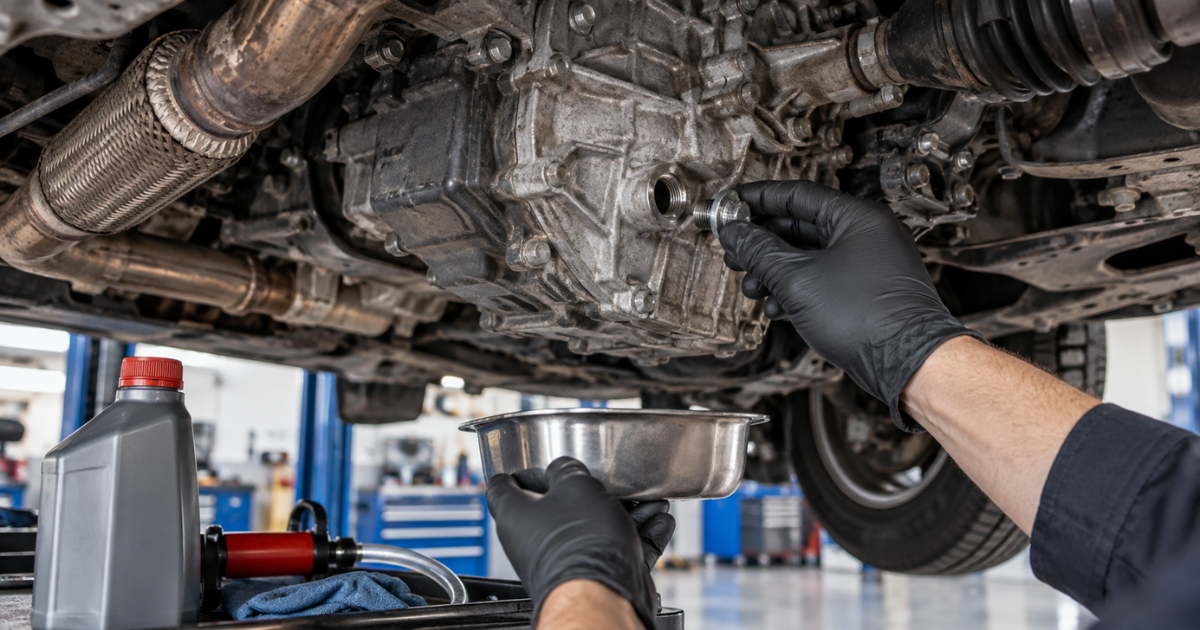
What Is Gear Oil and Why Does Its Level Matter?
Before You Check the Gear Oil
How to Check Gear Oil in Car Step by Step
1. Confirm the Correct Gearbox and Oil Specification
2. Park the Vehicle on Level Ground
3. Locate the Filler and Level Plug
4. Remove the Filler Plug Carefully
5. Check the Oil Level at the Opening
6. Inspect the Oil Condition
7. Add Only the Correct Oil When Needed
8. Reinstall the Plug Correctly
What Does the Correct Gear Oil Level Look Like?
Signs the Gear Oil Level May Be Low
Can You Check Gear Oil Without Lifting the Car?
What If the Gear Oil Is Low?
Should You Check Gear Oil When the Car Is Hot or Cold?
Common Mistakes When Checking Gear Oil
When Should a Professional Check the Gearbox?
Gear Oil Checks for Dubai Drivers
Final Answer
Frequently Asked Questions
Where is the gear oil located in a car?
How do I know if my gear oil level is correct?
Can I check gear oil from under the bonnet?
What happens if gear oil is too low?
Can I add any gear oil if the level is low?
Why does my gear oil level keep dropping?
Is checking gear oil a DIY job?