How to Check Oil Level in Car?
Published
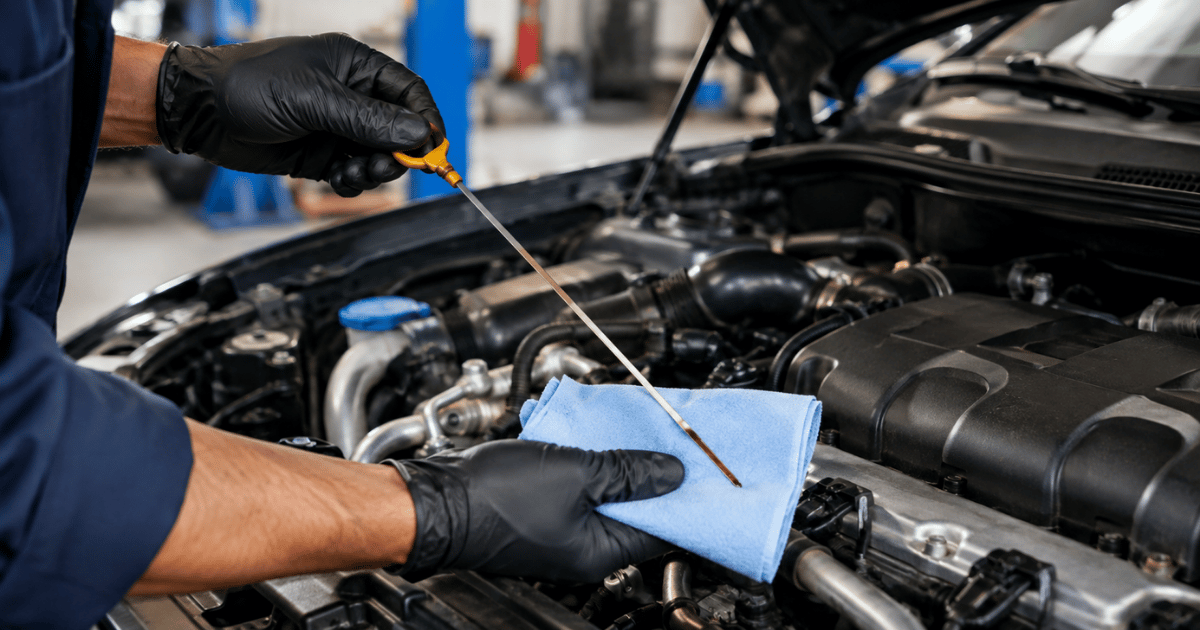
To check your car’s oil level, park on level ground and switch off the engine. Let the oil settle as your owner’s manual recommends. Remove the dipstick, wipe it clean, then insert it fully again. Pull it out once more and check where the oil sits between MIN and MAX. If your vehicle uses an electronic oil monitor, follow the dashboard procedure instead.
At Caroto Repair Dubai, we treat an oil check as part of proper engine care. A correct reading can reveal low oil before serious lubrication problems develop. It can also show when repeated topping up needs closer inspection. Dubai heat makes routine maintenance especially important for daily drivers. Our technicians check oil condition, leaks, filters, and the correct specification when service is needed. That approach helps drivers avoid guessing about their engine’s lubrication needs.
In this blog, you will learn how to check your car’s oil level correctly, read a dipstick, top up safely, avoid common mistakes, and spot warning signs that may need professional inspection.
Why Checking Your Engine Oil Level Matters
Engine oil reduces friction between moving parts and helps control heat inside the engine. A low level can leave components with less lubrication than they need. That increases wear and may lead to expensive mechanical damage. Oil also collects contaminants while circulating through the engine. Checking the level gives you a simple way to catch one problem early. However, oil level alone does not reveal the oil’s full condition.
What You Need Before Checking the Oil
You only need a clean cloth, gloves, level ground, and your owner’s manual. Keep the correct engine oil nearby only if topping up may be necessary. A small funnel can also help prevent spills. Never guess the correct viscosity or oil specification. Your vehicle manufacturer determines the required grade and performance standard. Using the wrong oil can create avoidable maintenance problems.
Do not assume every engine should be checked under identical conditions. Many guides recommend letting the oil settle after switching off the engine. Some manufacturers specify a warm-engine procedure, while others prefer a colder engine. Your owner’s manual should always take priority. Avoid touching hot components while working under the bonnet. A wrong checking method can produce a misleading reading.
How to Check Oil Level in a Car
1. Park on Level Ground
Choose a flat parking area before checking the oil. A slope can make the dipstick reading appear higher or lower. Apply the parking brake and switch off the engine. Let the oil return to the sump before measuring. Follow the waiting period specified by your vehicle manufacturer.
2. Locate the Oil Dipstick
Open the bonnet and find the engine oil dipstick. Many cars use a brightly colored handle, but colors are not universal. Your owner’s manual can show the exact location. Some modern vehicles no longer use a physical dipstick. Those cars measure oil through an electronic system.
3. Remove and Clean the Dipstick
Pull the dipstick out carefully and keep it away from hot parts. Do not use the first coating as your final reading. Wipe the measuring end with a clean lint-free cloth. Check that the stick is not damaged. Then insert it again for the actual measurement.
4. Reinsert and Check Again
Push the clean dipstick completely back into its tube. Make sure it reaches its normal seated position. Remove it smoothly and hold the measuring end level. Look for the MIN and MAX marks. Repeat the process if the oil line appears unclear.
How to Read an Engine Oil Dipstick
A reading below MIN means the engine oil level is too low. A reading between MIN and MAX is generally within the approved range. Oil above MAX may indicate overfilling. The amount between those marks varies between vehicles. Do not assume the gap always equals one litre or one quart. Check the manual before deciding how much oil to add.
What to Do If the Oil Level Is Low
First, confirm the correct oil viscosity and specification for your engine. Remove the filler cap only when the engine is safe to access. Add a small amount instead of pouring heavily. Let the added oil settle before checking again. Repeat until the level sits within the approved range. Stop before the oil reaches above the MAX mark.
How to Check Oil Without a Dipstick
Some newer cars use electronic oil measurement instead of a physical dipstick. The reading may appear on the instrument cluster or infotainment screen. Exact menu steps differ between brands and models. Some systems require specific engine temperatures before measuring. Others require the vehicle to remain stationary briefly. Follow the owner’s manual for your exact procedure.
Do not confuse oil level with oil life or oil pressure. Oil level tells you how much oil is present. Oil life estimates when scheduled replacement may be due. Oil pressure relates to how lubrication circulates through the engine. These readings answer different maintenance questions. Understanding them helps you respond correctly to dashboard information.
How Often Should You Check Car Oil in Dubai?
There is no single checking interval for every car in Dubai. Your manufacturer’s guidance and vehicle condition should set the routine. Check before long journeys and between scheduled services when appropriate. Older engines may need closer monitoring if they consume oil. Cars with known leaks also deserve more frequent checks. Any repeated drop in level should be investigated.
Dubai driving can place extra demands on engines and lubricants. High temperatures increase the importance of correct oil and cooling. Heavy traffic can keep engines running for long periods. Dusty conditions also make filter maintenance important. These factors make regular inspection valuable for local drivers. They still do not replace the manufacturer’s maintenance schedule.
Common Mistakes When Checking Engine Oil
Checking on a slope is one of the easiest ways to get a poor reading. Reading the dipstick before wiping it can also mislead you. Some drivers fail to insert the dipstick fully before rechecking. Others assume every car requires a completely cold engine. Another common mistake is adding oil without checking the specification. Filling too quickly can also push the level above MAX.
Drivers also confuse oil pressure warnings with routine service reminders. An oil pressure warning can indicate a more serious lubrication problem. Repeatedly low oil may also point to a leak or engine consumption. Topping up can restore the level without fixing the cause. If a warning remains, further driving may be unsafe. Follow the manufacturer’s warning instructions and arrange inspection.
When Low Oil Needs More Than a Top-Up
A single low reading may result from delayed maintenance or previous underfilling. Repeated oil loss suggests a problem that deserves diagnosis. External leaks can appear around seals, gaskets, filters, or drain areas. Some engines also consume oil internally between services. The correct diagnosis depends on the vehicle and loss rate. Continual topping up can hide an important mechanical issue.
Watch for oil spots, burning oil smells, warning lights, or rapid level changes. Blue exhaust smoke can also accompany internal oil consumption. Do not rely on one symptom to identify the cause. A proper inspection can separate leaks from consumption or pressure problems. That avoids unnecessary repairs and protects the engine. Early diagnosis is safer than repeated guesswork.
Why the Correct Oil Specification Matters
Engine oil is not selected only by brand name or viscosity. Manufacturers specify performance standards for each engine. Turbocharged, diesel, and petrol engines can have different requirements. Using unsuitable oil can affect lubrication and related systems. Always confirm the approved specification before topping up. The owner’s manual is the best starting point.
Get Your Engine Oil Checked at Caroto Repair Dubai
Checking oil at home is useful, but it does not replace professional diagnosis. A dipstick can show the level, not why that level changed. It cannot confirm every lubrication, leak, or pressure problem either. Caroto Repair Dubai provides car oil change in Dubai and engine maintenance support. Our service can include oil selection, filter replacement, leak checks, and inspection. We focus on correct maintenance rather than unnecessary replacement.
If your oil keeps dropping, arrange an inspection before topping up becomes routine. The same applies when an oil warning appears unexpectedly. Bring the vehicle in if you are unsure about the correct oil specification. We can inspect the engine and recommend the next step. That may involve a simple oil service or deeper diagnosis. Correct maintenance protects the engine better than trial and error.
Frequently Asked Questions
Q1. How do I know if my car oil level is low?
Answer: Follow the manufacturer’s procedure and check the dipstick or electronic display. Oil below MIN means the level is too low. Some vehicles also show a low-oil message. Do not rely only on dashboard warnings for routine checks. Repeated low readings can indicate leakage or consumption.
Q2. Should I check engine oil when the car is hot or cold?
Answer: There is no universal rule for every vehicle. Some manufacturers prefer a warm engine followed by a settling period. Others specify checking under colder conditions. The engine should be switched off for a manual dipstick check. Your owner’s manual remains the best reference.
Q3. Where should the oil level be on the dipstick?
Answer: The oil should normally sit within the marked measuring range. That range may use MIN and MAX labels. It can also use dots or a crosshatched section. Oil below the lower mark needs attention. Oil above the upper mark can mean overfilling.
Q4. Can I drive if the engine oil level is below MIN?
Answer: Driving below the minimum oil level can increase engine risk. Correct the level with the approved oil before continuing. If an oil pressure warning appears, treat it more seriously. Do not keep driving simply because you added oil. Arrange professional inspection if the warning remains.
Q5. What happens if I put too much oil in my car?
Answer: Too much engine oil can cause lubrication problems. Excess oil may become aerated by moving internal parts. That can reduce lubrication quality and increase pressure. Significant overfilling may also contribute to leaks or damage. Remove excess oil or have a workshop correct it.