When to Repair Car Electrical System-Tips
Published
Electrical issues in your car can happen at the most inconvenient times, leaving you stranded or facing expensive repairs. If you're noticing dim lights, difficulty starting your car, or other unusual electrical behavior, it's crucial to understand the signs and know when to repair your car's electrical system.
Your car’s electrical system includes components like the battery, alternator, and fuses that power essential functions. When these parts fail, it can disrupt the entire system, causing various issues.
At Caroto Repair Dubai, we specialize in diagnosing and repairing car electrical systems. Our expert team is ready to provide quick, reliable service to get you back on the road. In this article, we’ll explore common symptoms of electrical issues, how to troubleshoot, and when it's time to call in the professionals for a repair.
Understanding Your Car’s Electrical System
Did you know that your car’s electrical system powers everything from the engine to your air conditioning? It’s easy to take it for granted until something goes wrong. In fact, many car issues stem from electrical problems, and understanding how the system works is key to diagnosing and fixing these issues early.
Your car’s electrical system consists of several critical components, each playing a unique role in keeping the vehicle running smoothly:
Battery: The heart of the electrical system, the battery stores electrical energy to power the vehicle’s electrical systems when the engine isn’t running. It also helps start the engine when you turn the ignition key.
Alternator: Once the engine is running, the alternator generates power to recharge the battery and provide electricity to the car’s systems, including lights, radio, and air conditioning.
Fuses: Fuses protect electrical circuits in your vehicle. If there’s a short circuit or an overload, fuses blow to prevent further damage to the system.
Wiring Harness: This network of cables connects various components of the electrical system, ensuring electricity flows to where it’s needed.
Understanding how these components interact is essential when troubleshooting electrical issues. If one component malfunctions, it can impact the entire system, leading to breakdowns or other malfunctions.
Common Symptoms of Car Electrical Issues
As a car owner, you rely on your vehicle’s electrical system for smooth operation. But what happens when things start to go wrong? Electrical issues in cars are more common than many think. In fact, electrical problems are responsible for about 10% of all vehicle breakdowns, with many being linked to faulty batteries, alternators, or wiring issues. Here are the most common signs to look for:
Dim or Flickering Lights
If your headlights are dimming or flickering while driving, it’s a clear indication that your electrical system might be struggling to maintain power. This is often caused by a weak battery or faulty alternator that’s unable to provide a consistent flow of electricity. If the lights flicker only when idling or accelerating, the issue could also point to alternator issues.
Engine Stalling or Starting Issues
A car that’s hard to start or stalls unexpectedly is often showing signs of a failing electrical system. The battery might not be providing enough power to start the engine, or the alternator may not be recharging it correctly while driving. These issues can worsen quickly and lead to complete breakdowns.
Faulty or Unresponsive Dashboard Indicators
Have you ever noticed your dashboard lights flickering or not responding at all? This could be a sign of a malfunction in the car's wiring or a deeper electrical problem, such as a failing fuse or a short circuit. In some cases, malfunctioning indicators can point to problems with the vehicle's ECU (Engine Control Unit), which controls various electrical functions.
Blown Fuses or Tripped Circuit Breakers
If your car’s electrical components (lights, air conditioning, radio) stop working suddenly, it could be due to a blown fuse or tripped circuit breaker. Fuses are designed to protect your vehicle’s electrical system by cutting power to a circuit when it detects too much current. A blown fuse is often a quick fix, but if it blows repeatedly, it could indicate a deeper issue like faulty wiring or an overworked alternator.
When to Repair vs When to Monitor Your Electrical System
Electrical issues in your car can range from simple to serious, and knowing when to repair them versus when to monitor the issue is crucial for avoiding unnecessary repairs or breakdowns. For minor problems that don’t pose an immediate risk, it’s often best to monitor the situation closely and keep an eye out for any further signs. However, if the issue seems to be worsening or causes any safety concerns, it’s better to act quickly.
Here’s a helpful guide to assess the severity of common electrical issues:
Minor Issues to Monitor:
Flickering dashboard lights
Intermittent starting problems
Slightly dim headlights when idling
Issues That Require Immediate Repair:
Complete engine failure to start
Electrical components completely shutting off
Burning smells or visible smoke near electrical parts
DIY Tips for Diagnosing and Fixing Basic Electrical Issues
Diagnosing basic electrical problems in your car can be straightforward with the right tools and knowledge. For common issues like a dead battery or a blown fuse, here’s how you can troubleshoot and fix them yourself.
Checking for Blown Fuses
Blown fuses are a common cause of electrical problems. To check:
Locate the Fuse Box – Find your car’s fuse box (typically in the dashboard, under the hood, or near the glove box).
Inspect the Fuses – Remove the fuses one by one and visually inspect for any that are blackened or have a broken filament.
Replace the Fuse – If a fuse is blown, replace it with one of the same rating (e.g., 10A, 15A).
Testing the Battery with a Multimeter
A multimeter is essential for testing your car battery's charge. To check your battery:
Turn Off the Car – Make sure the car is off and the multimeter is set to DC voltage.
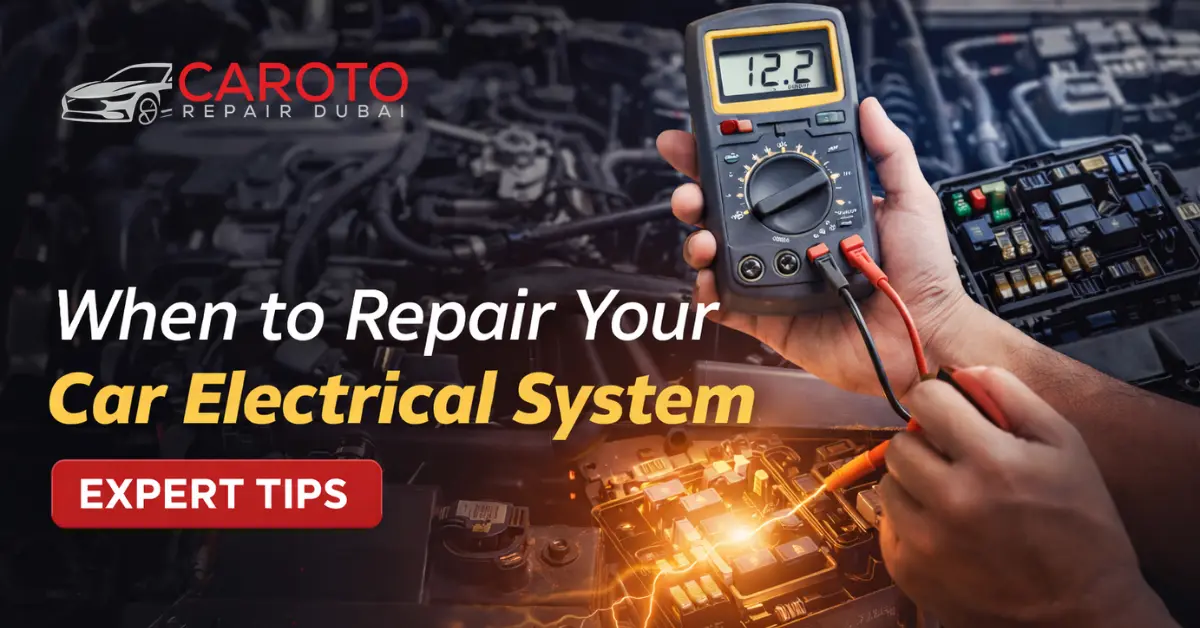
Test the Voltage – Connect the multimeter to the battery terminals: red to positive, black to negative. A healthy battery should read 12.4V–12.7V.
Load Test – If the voltage drops below 12V, your battery is weak and may need replacing.
Cleaning Corroded Battery Terminals
Corrosion around your battery terminals can cause poor connections and weak electrical flow. Here’s how to clean them:
Wear Gloves and Eye Protection – Battery acid can be harmful.
Disconnect the Battery – Always disconnect the negative terminal first.
Clean with Baking Soda – Mix a small amount of baking soda and water to neutralize the corrosion. Scrub with a brush and wipe off.
Reconnect the Battery – After cleaning, reconnect the terminals.
These simple DIY checks can help you identify and solve basic electrical issues. If the problem persists, it may be time to consult a professional.
Why You Should Consider Professional Help for Electrical Repairs
While DIY repairs can handle basic electrical issues, some problems require the expertise of a professional. Complex components such as the alternator, ECU, and wiring harnesses need specialized knowledge and tools to repair safely.
Here are some reasons to consider professional help:
Alternator Issues: A malfunctioning alternator can lead to complete power failure, and diagnosing or repairing it requires specific tools and experience.
Wiring Problems: If there are shorts or wiring issues, a professional technician can properly trace the problem without causing further damage to your vehicle.
ECU Failures: The ECU controls several electrical systems in your car. If it’s not functioning properly, it can lead to significant issues that should be handled by an expert.
How Local Conditions Impact Your Car’s Electrical System
The climate in Dubai can have a significant impact on your car’s electrical system. With temperatures regularly exceeding 40°C (104°F) in the summer, the heat can accelerate wear and tear on key electrical components such as the battery, alternator, and wiring.
Heat and Battery Life:
High temperatures can cause the fluid in the battery to evaporate, leading to a shorter lifespan. The battery’s performance can degrade faster in extreme heat, making it harder to start your car and power electrical components. In Dubai, it’s not uncommon for car batteries to last only 2–3 years due to the heat.
Alternator and Charging System Stress:
The alternator, which charges your battery while you drive, can also wear out quicker in hot conditions. In cities like Dubai, where temperatures soar, the alternator works harder to maintain the battery’s charge, resulting in potential overheating and failure.
Wiring and Electrical Components:
Excessive heat can also damage the insulation on wires, leading to potential shorts and electrical failures. Over time, this damage can cause the system to malfunction and affect various car functions like lights, air conditioning, and the sound system.
How to Mitigate the Effects of Heat:
Regular Battery Checks: Have your battery checked every 6 months, especially before summer, to ensure it’s in good condition and ready to face the heat.
Use a Battery Insulator: This helps protect the battery from extreme temperatures.
Keep Your Car in a Shade or Garage: Parking in a shaded area can reduce the temperature impact on your car’s electrical system.
Schedule Regular Maintenance: A professional check-up can ensure that all components of your electrical system are working optimally, especially in harsh climates.
Conclusion
Understanding your car’s electrical system and recognizing when to address issues is essential for maintaining a smooth and safe driving experience. By identifying common symptoms like dim lights, starting problems, and faulty fuses early, you can prevent further damage and costly repairs. Whether you're tackling minor problems with DIY methods or seeking professional help for more complex issues, acting promptly is key.
At Caroto Repair Dubai, we specialize in diagnosing and repairing car electrical systems, ensuring that your vehicle operates at its best. Our experienced team is equipped to handle everything from routine checks to complex electrical repairs. If you’re facing electrical issues, don’t hesitate to contact us or visit our garage today to schedule a professional evaluation.