When to Replace Car Battery-5 Signs
Published
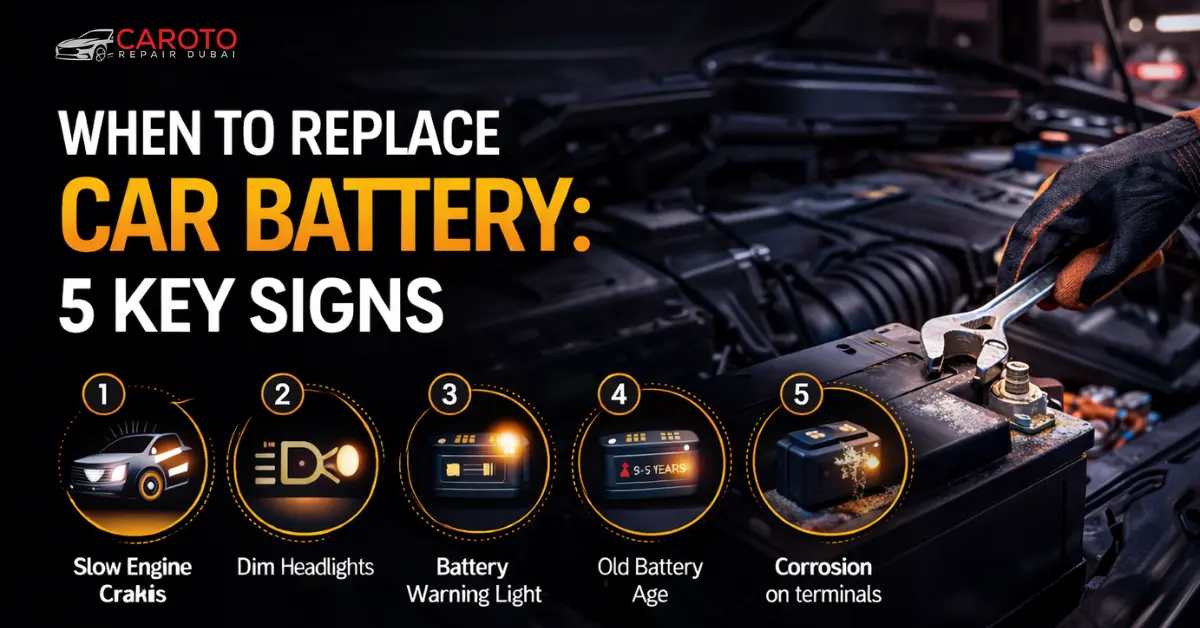
When your car battery starts showing signs of failure, it can leave you stranded at the most inconvenient times. Understanding when to replace your car battery is crucial to avoid unexpected breakdowns. A typical car battery lasts about 3–5 years, but factors like weather, driving habits, and battery type can affect this lifespan.
Knowing when to replace your battery can save you time, money, and the hassle of being stuck on the road. If you notice slow starts, dim lights, or a persistent battery warning light, it might be time for a replacement. At Caroto Repair Dubai, we specialize in diagnosing and replacing car batteries to keep your vehicle running smoothly.
In this blog, we’ll cover the top signs that indicate it’s time to replace your car battery and how you can maintain it to extend its life.
Why Car Batteries Fail and How to Spot the Signs
Did you know that extreme heat, like the one we often experience here in Dubai, can shorten a car battery’s lifespan? On average, car batteries last 3 to 5 years, but the high temperatures can cause the battery to wear out much faster. That's why it's important to be aware of the signs indicating your battery may need replacing.
Car batteries fail for several reasons, including age, corrosion, and improper maintenance. In hot climates, like Dubai’s, the heat accelerates chemical reactions inside the battery, leading to faster breakdowns. If you don't maintain your battery properly, or if you make frequent short trips, it could affect your battery’s ability to recharge fully. Let’s look at how to spot the signs before you're left stranded.
5 Key Signs That Indicate It's Time to Replace Your Car Battery
Recognizing the warning signs early can save you from a costly, inconvenient breakdown. Here are the five key signs that your car battery might be on its last legs:
Sign 1: Slow Engine Cranks
If your engine takes longer than usual to start or cranks sluggishly, it’s a clear sign that your battery might not be providing enough power. A slow crank happens because the battery's charge is too weak to provide the necessary energy to start the engine.
Sign 2: Dim or Flickering Headlights
When you start your car and notice that the headlights flicker or dim, it means that the battery is having trouble supplying power to the electrical system. If your headlights are regularly dim, it’s time to check the battery.
Sign 3: Dashboard Battery Warning Light
Most cars have a battery light that lights up when there is an issue with the battery or charging system. If you see this light, it indicates that your car is not receiving the correct voltage from the battery, and it’s a strong signal that you should get your battery checked.
Sign 4: Old Age of the Battery
Batteries don’t last forever. On average, a battery will last about 3 to 5 years, depending on use. If your battery is nearing this age or is older, it's wise to have it tested regularly to ensure it’s still performing well.
Sign 5: Corrosion or Leaks on the Battery Terminals
When you notice corrosion (a powdery, white substance) around the battery terminals, or if there’s any leakage, it indicates that the battery is not functioning properly. Corrosion can cause poor connections and reduce the battery’s effectiveness. If left unchecked, it can result in the complete failure of the battery.
How to Test Your Car Battery to Confirm the Need for Replacement
Testing your car battery is essential in confirming whether it’s time for a replacement. Fortunately, you can easily test the battery yourself or have it professionally checked. Here’s how to do it:
DIY Battery Test with a Multimeter
A multimeter is an inexpensive tool that can help you measure the voltage of your car battery. Follow these simple steps:
Turn off your car: Make sure your engine is off before you begin testing.
Set the multimeter to DC voltage: Most car batteries will provide between 12.4V and 12.7V when fully charged.
Connect the multimeter: Place the red (positive) lead on the positive terminal of the battery and the black (negative) lead on the negative terminal.
Read the voltage: A healthy battery will read between 12.4V and 12.7V. If the reading is below 12.4V, your battery is weak, and if it’s under 12V, it may need to be replaced.
Load Testing
If your multimeter reading shows a weak charge, you can perform a load test to simulate the battery’s performance under stress:
Start the car and turn on electrical components (headlights, AC): This will draw power from the battery.
Check voltage again: If the voltage drops significantly (below 10V) when the load is applied, the battery can no longer hold an adequate charge and should be replaced.
Professional Testing
If you're unsure about performing the test yourself or want a second opinion, most auto repair shops and battery service centers can perform a free battery test. They'll check the battery’s health using more advanced equipment to ensure the charge and capacity are still optimal.
By regularly testing your car battery, you can avoid the inconvenience of a sudden breakdown. At Caroto Repair Dubai, we offer battery diagnostics and testing services to ensure you're never caught off guard.
Proactive Steps to Extend Your Car Battery’s Lifespan
While car batteries don’t last forever, there are several proactive steps you can take to extend their lifespan and avoid frequent replacements. Follow these simple tips to get the most out of your battery:
1. Avoid Short Trips
Frequent short trips prevent your battery from fully charging, which can lead to premature wear. Whenever possible, try to drive longer distances, allowing the alternator to recharge the battery properly.
2. Keep Your Battery Clean
Over time, dirt and grime can build up on your battery terminals, which can interfere with the connection and reduce efficiency. Clean the terminals regularly with a mixture of baking soda and water to prevent corrosion.
3. Check for Corrosion
Corrosion around the battery terminals can lead to poor electrical contact and a slower charging process. If you notice any powdery white substance around the terminals, clean it off using a wire brush or a terminal cleaner.
4. Turn Off Electrical Accessories When Not in Use
Excessive use of electrical accessories like the radio, air conditioning, or lights when the engine is off can drain the battery. Always ensure that all accessories are turned off before you exit the car.
5. Ensure Consistent Battery Charge
To prevent deep discharges, keep your battery charge at an optimal level. If your car sits unused for long periods, consider using a battery maintainer or trickle charger to keep the battery charged.
By taking these simple steps, you can significantly extend the life of your car battery and avoid the need for a replacement too soon. At Caroto Repair Dubai, we offer comprehensive battery maintenance services to keep your car running smoothly for longer.
DIY vs Professional Car Battery Replacement: Which Is Right for You?
When it comes time to replace your car battery, you might wonder whether to take the DIY route or leave it to the professionals. Both options have their pros and cons, so it’s important to weigh the benefits and challenges of each before making a decision.
DIY Car Battery Replacement: The Pros and Cons
Pros:
Cost Savings: Replacing your car battery yourself can save you money on labor costs. If you’re comfortable working on your car and have the right tools, it can be an affordable option.
Convenience: You have the flexibility to do it at your own time and pace. No need to wait for an appointment at the shop.
Cons:
Safety Concerns: Car batteries contain sulfuric acid and can give off harmful gases. If not handled properly, they can pose safety risks. You need to wear protective gloves and eyewear to avoid injury.
Technical Know-How: While battery replacement is fairly straightforward for most cars, it can still be tricky, especially for newer models with more complex setups. Without the right expertise, you could end up damaging the electrical system.
No Warranty or Guarantees: If you replace the battery yourself and something goes wrong, you won’t have the backup of a warranty or professional guarantee. Additionally, incorrect installation could void your car’s warranty.
Professional Car Battery Replacement: The Pros and Cons
Pros:
Expertise and Precision: Professional mechanics have the knowledge and experience to handle a wide range of vehicles and battery types. They can ensure proper installation, preventing future issues with your electrical system.
Safety and Convenience: Professionals follow strict safety protocols, so you don’t have to worry about the potential hazards associated with battery replacement. Additionally, you won’t have to lift a finger.
Warranty and Guarantee: Many professional services offer warranties on the battery and labor. This gives you peace of mind knowing that if something goes wrong, you’re covered.
Cons:
Higher Cost: The main downside of professional replacement is the added cost for labor and service. However, this is often worth it for the expertise and safety guarantees you receive.
Time and Scheduling: You may need to schedule an appointment, which can take up valuable time. Some auto repair shops may also be booked out, delaying the replacement process.
Which Option Is Right for You?
If you're comfortable with car repairs, have the necessary tools, and are confident in your ability to handle the job safely, DIY battery replacement can save you money. However, if you're unsure, want to ensure safety, or don’t have the tools, a professional replacement is a smart choice.
At Caroto Repair Dubai, we specialize in quick, reliable, and safe car battery replacement services. Whether you choose to go DIY or professional, we’re here to help guide you through the process and provide expert advice when needed.
Conclusion
Knowing when to replace your car battery is essential to avoid unexpected breakdowns. From slow engine cranks to corrosion around terminals, recognizing the signs early can help you avoid being stranded. Testing your battery regularly and taking proactive steps to maintain it can also extend its lifespan, giving you more reliability on the road.
If you're unsure about replacing your car battery yourself or need expert assistance, Caroto Repair Dubai is here to help. With our experienced team and professional services, we ensure a hassle-free battery replacement with a focus on safety and quality. For more information or to schedule a battery check, visit our shop today!
FAQs About Car Battery Replacement
Question: How do you know if your car battery needs replacing?
Answer: Look for signs like slow engine cranks, dimming headlights, battery warning lights, corrosion around the terminals, and the age of the battery itself. If you notice any of these, it’s time to consider a replacement.
Question: How will I know when to replace my car battery?
Answer: A battery replacement is needed when it fails to hold a charge, shows signs of wear, or exceeds its typical lifespan (3 to 5 years). Regularly testing your battery can help you identify when it’s time.
Question: Is a 7-year-old car battery still good?
Answer: At 7 years old, a car battery is likely at the end of its lifespan. While it may still work, it’s more prone to failure and should be tested to ensure it still performs effectively.
Question: What is the 40/80 rule for batteries?
Answer: The 40/80 rule states that a battery is typically at 40% of its life when it reaches 80% of its expected capacity. If your battery is showing signs of aging, consider replacing it before it fails completely.
Question: What is the lifespan of a car battery?
Answer: On average, a car battery lasts about 3 to 5 years, but this can vary depending on factors like weather conditions, driving habits, and maintenance.
Question: What are signs of a bad car battery?
Answer: Signs of a bad battery include difficulty starting the car, flickering lights, battery warning light on the dashboard, and visible corrosion or leaks. If you experience any of these, it’s time for a replacement.