Do Electric Cars Have Transmissions?
Published
Do electric cars have transmissions? Yes. Most electric cars use a single-speed reduction gearbox rather than the multi-speed automatic or manual transmission found in petrol and diesel cars. This fixed-ratio unit reduces the electric motor’s high rotational speed and transfers torque to the wheels without repeated gear changes. The U.S. Department of Energy lists the electric transmission as the component that transfers mechanical power from the traction motor to the wheels. Most EVs need only one forward ratio because electric motors produce strong torque across a wide speed range. At Caroto Repair Dubai, we regularly diagnose gearbox, drivetrain, electrical, and computer-related vehicle faults, so this guide focuses on the practical differences Dubai drivers should understand. It covers EV gearing, multi-speed exceptions, hybrid transmissions, maintenance, warning signs, and when professional diagnosis may be needed. Electric cars do have transmissions, but most use a single-speed reduction gearbox. A reduction gear lowers motor speed and transfers torque to the wheels. Most EVs do not need conventional gear changes. Reverse usually comes from reversing motor rotation. Some performance EVs use two-speed transmissions. Hybrid transmissions can be more like conventional gearboxes. EV gearboxes still use gears, bearings, seals, and lubricant. New noises, leaks, vibration, or drivetrain alerts need diagnosis. Dubai heat makes correct fluids and cooling especially important. Most battery-electric cars use a single-speed reduction gearbox, also called a reduction gear, one-speed transmission, fixed-ratio gearbox, or single-stage transmission. Its job is simple: transfer power from the electric motor to the wheels at a usable speed and torque. The electric motor can rotate far faster than the wheels. The reduction gear lowers that speed while increasing usable wheel torque, then sends power through the differential. The U.S. Department of Energy defines an electric transmission as the component transferring mechanical power from the traction motor to the wheels. So, “EVs have no transmission” is usually an oversimplification. Most simply lack a conventional multi-speed transmission. Most EVs need only one gear because an electric motor delivers useful torque over a much wider operating range than a combustion engine. A petrol or diesel engine works best within narrower RPM ranges, so a multi-speed gearbox keeps it near those ranges. An electric motor produces strong torque from very low speed and operates across a broad RPM range. An EV can therefore accelerate from a stop to motorway speed without shifting through several gears. An EV reduction gear performs three main jobs: Reduces the electric motor’s high rotational speed. Increases usable torque delivered to the wheels. Transfers motor power through the differential to the tyres. The electric motor may rotate several times for every single wheel revolution. A fixed reduction ratio converts that high motor speed into the lower wheel speed required for driving. The exact ratio varies by vehicle, motor design, wheel size, and performance target. Electric and combustion vehicles both need to transfer power to their wheels. The way they do it is different. Most conventional automatic transmissions contain multiple gearsets, clutches, hydraulic controls, and shifting mechanisms. EV drivetrains generally eliminate many of these components. Drivers notice the difference through smooth acceleration because a typical EV does not interrupt power delivery for normal gear changes. Caroto Repair Dubai also explains conventional gearbox faults in its guide towhat a transmission problem in a car is. Yes, electric cars have gears, but most do not have multiple forward gears like petrol or diesel vehicles. A typical EV uses one fixed reduction ratio between the electric motor and wheels. The gear ratio remains the same while the motor changes speed. This is why manufacturers may use terms such as: Single-speed gearbox Single-speed transmission Reduction gear Fixed-ratio transmission Single-stage transmission The selector inside the cabin may still show: P – Park R – Reverse N – Neutral D – Drive Those positions do not mean the vehicle contains a conventional four-speed, six-speed, or eight-speed automatic transmission. Most electric cars reverse by making the electric motor rotate in the opposite direction rather than engaging a separate mechanical reverse gear. The vehicle's power electronics control this process. When the driver selects Reverse, the motor changes its rotation and sends power through the same reduction gearing. This eliminates another mechanical gear arrangement found in many traditional transmissions. The driver still experiences a familiar R position on the selector, but the process underneath is different. Yes. A small number of electric cars use multi-speed transmissions, mainly to meet specific performance and efficiency goals. The Porsche Taycan is a current example. Porsche specifies an automatically shifting two-speed transmission on the rear axle. The shorter first ratio supports strong acceleration, while the longer second ratio supports efficiency and performance at higher speeds. On twin-motor Taycan models, Porsche describes a single-speed transmission at the front and two-speed transmission at the rear. The Taycan demonstrates why an automaker may add another ratio to an electric drivetrain. More gears can improve specific performance or efficiency goals, but they add hardware, controls, weight, and packaging needs. For most EVs, the motor’s broad operating range makes a fixed ratio sufficient. This is why the single-speed reduction gearbox remains the dominant EV layout. For everyday driving, electric cars behave like automatics because the driver does not change gears. Selecting Drive lets the vehicle control motor output without shifting through conventional ratios. Technically, a torque-converter automatic and an EV reduction gearbox are different mechanisms, even though both remove manual shifting from the driver. This is why an EV may be described as “automatic” on vehicle listings even though it does not contain the same automatic gearbox found in a petrol car. Yes. Hybrid and plug-in hybrid cars have transmissions, and their systems can be considerably different from those in fully electric vehicles. A hybrid combines an internal-combustion engine with one or more electric motors. Its transmission must manage power from these sources according to the vehicle's design. Hybrid systems may use: Conventional automatic transmissions Continuously variable transmissions Electronically controlled power-split systems Dual-clutch transmissions Dedicated hybrid transmissions The U.S. Department of Energy states that hybrid and plug-in hybrid transmissions transfer mechanical power from the engine and/or electric traction motor to the wheels. A battery-electric vehicle and a plug-in hybrid may both contain electric motors, but their transmission designs and servicing requirements can be very different. Many EV reduction gearboxes use lubricant for their gears and bearings, but servicing requirements vary between manufacturers and models. Gears and bearings require lubrication to control friction, heat, and wear. Some electric drive units integrate several components into one assembly, including: Electric motor Reduction gears Differential Bearings Seals Cooling components Never assume an electric car requires the same automatic transmission fluid service as a petrol vehicle. Check the manufacturer schedule for: Approved lubricant Fluid inspection Replacement interval, when specified Seal inspection Cooling-system requirements Drive-unit procedures Manufacturers may call the lubricant gear oil, transmission fluid, or drive-unit fluid. Caroto Repair Dubai'sgearbox and transmission service in Dubai can support drivetrain diagnosis, while EV-specific servicing should follow manufacturer procedures. Yes. Electric vehicle transmissions are mechanically simpler, but their gears, bearings, seals, differential, lubricant, mounts, and related drive components can still develop faults. Possible problems include: Bearing wear Gear damage Seal leakage Differential faults Drive-unit vibration Lubricant loss Mount damage Electronic control faults Motor or inverter problems that feel like gearbox faults A new whining, grinding, humming, or clicking sound can signal a drivetrain issue. Dashboard warnings may also come from the motor, inverter, sensors, software, or gearbox, so proper diagnostics matter. An electric vehicle should normally deliver smooth and immediate power. A noticeable change deserves inspection. Watch for: New whining or grinding sounds Vibration during acceleration Jerking or hesitation Reduced power Fluid underneath the drive unit Difficulty selecting Drive or Reverse Drivetrain warning messages Abnormal motor noise Overheating warnings Changes in regenerative braking A warning does not automatically mean the gearbox needs replacement. Modern EVs rely heavily on electronics. The same symptoms can come from: Motor faults Inverter problems Battery issues Cooling faults Sensors Wiring Software Caroto'scar computer diagnostics in Dubai can identify stored fault codes and live vehicle data before unnecessary components are replaced. Most battery-electric vehicles do not have a conventional driver-operated clutch. Manual combustion cars need a clutch to temporarily disconnect the engine from the gearbox during starting and gear changes. A single-speed electric vehicle does not normally perform those repeated shifts. Electronic motor control manages power delivery smoothly from zero speed. Specialised EV designs can use additional clutch mechanisms, so the exact arrangement depends on the vehicle. For a typical passenger battery-electric car, however, a conventional clutch pedal is unnecessary. Yes, but EV transmission maintenance is usually different from servicing a conventional multi-speed automatic gearbox. The vehicle manufacturer may specify checks for: Drive-unit lubricant Seals Cooling components Mounts Differential Software Diagnostic faults Owners should follow the schedule for their exact model rather than applying petrol-car maintenance intervals to an EV. Important drivetrain checks include: Fluid or lubricant leaks New drive-unit noises Mount condition Cooling performance Diagnostic fault codes Software updates Differential operation High-voltage system condition Never open or repair high-voltage electric vehicle components without appropriate training and isolation procedures. Caroto also providescar electrical repair in Dubai, including diagnostic work across conventional, hybrid, and electric vehicle electrical systems. Dubai's high ambient temperatures make thermal management, correct fluids, and timely drivetrain diagnosis particularly important. An electric vehicle uses a thermal system to control the operating temperature of components such as the traction battery, electric motor, and power electronics. The U.S. Department of Energy identifies thermal management as a key component of an all-electric vehicle. For Dubai EV owners: Follow the manufacturer service schedule. Investigate drivetrain fluid leaks promptly. Keep cooling-system maintenance current. Respond to temperature warnings. Use only approved drive-unit lubricant. Avoid unqualified high-voltage repairs. Diagnose new noises or vibration. Complete manufacturer software updates when required. High ambient temperatures, motorway journeys, and repeated high-power acceleration can increase thermal demand. A healthy cooling system therefore matters to the complete EV powertrain, not only the battery. Answer: Yes. Tesla electric vehicles use fixed-ratio reduction gearing to transfer electric motor power to the wheels rather than a conventional multi-speed automatic gearbox. Exact drive-unit designs and ratios vary between Tesla models and generations. Answer: Most battery-electric cars use one fixed forward gear ratio. Electric motors operate across a broad speed range, so the vehicle can accelerate from low speed to highway speed without shifting through several gears. Answer: Electric motors produce strong torque from very low speed and operate across a much wider RPM range than combustion engines. One fixed reduction ratio can therefore cover most normal driving without repeated gear changes. Answer: Yes. Most electric cars have a reduction gearbox or equivalent transmission between the motor and wheels. It performs the basic transmission job but contains fewer ratios than a conventional petrol or diesel gearbox. Answer: Most EVs do not need a separate mechanical reverse gear. Their control electronics reverse the direction of the electric motor, allowing the same reduction gearing to move the vehicle backward. Answer: Many EV drive units contain lubricant for gears and bearings. Fluid type, inspection requirements, and replacement intervals vary by manufacturer, so the vehicle's official maintenance schedule should be followed. Not completely. EV gearboxes generally require less routine attention than complex multi-speed transmissions, but bearings, seals, lubricant, differentials, cooling components, and electronic systems still require inspection when specified. Answer: Yes, depending on the fault and manufacturer design. Some parts can be serviced individually, while certain integrated drive units may require specialised repair or replacement. Diagnostics should first confirm whether the problem comes from the gearbox, motor, inverter, electronics, or another drivetrain component. Do electric cars have transmissions? Yes. Most electric vehicles use a single-speed reduction gearbox that transfers power from the electric motor to the wheels while reducing motor speed and delivering usable wheel torque. They usually do not need the multi-speed transmissions found in petrol and diesel cars because electric motors produce strong torque from very low speed and operate across a broad RPM range. Exceptions exist. Performance EVs such as the Porsche Taycan use a two-speed rear transmission to meet specific acceleration and high-speed efficiency goals. EV gearboxes are simpler, but they are not completely maintenance-free. Bearings, seals, lubricants, cooling systems, differentials, and electronic controls can still require attention. For Dubai drivers, manufacturer-approved fluids, effective thermal management, and early diagnosis of noises, leaks, vibrations, or drivetrain warnings provide the best approach to EV drivetrain care. A drivetrain warning, unusual noise, vibration, fluid leak, or loss of power should be properly diagnosed before components are replaced. Caroto Repair Dubai provides gearbox and transmission service, electrical repair, and computer diagnostics in Dubai. Technicians can inspect drivetrain symptoms, scan vehicle control modules, and determine whether the fault is mechanical or electronic. Call +971 56 858 7348 or visit Caroto Repair Dubai in Jumeirah, Dubai for professional vehicle diagnostics and repair.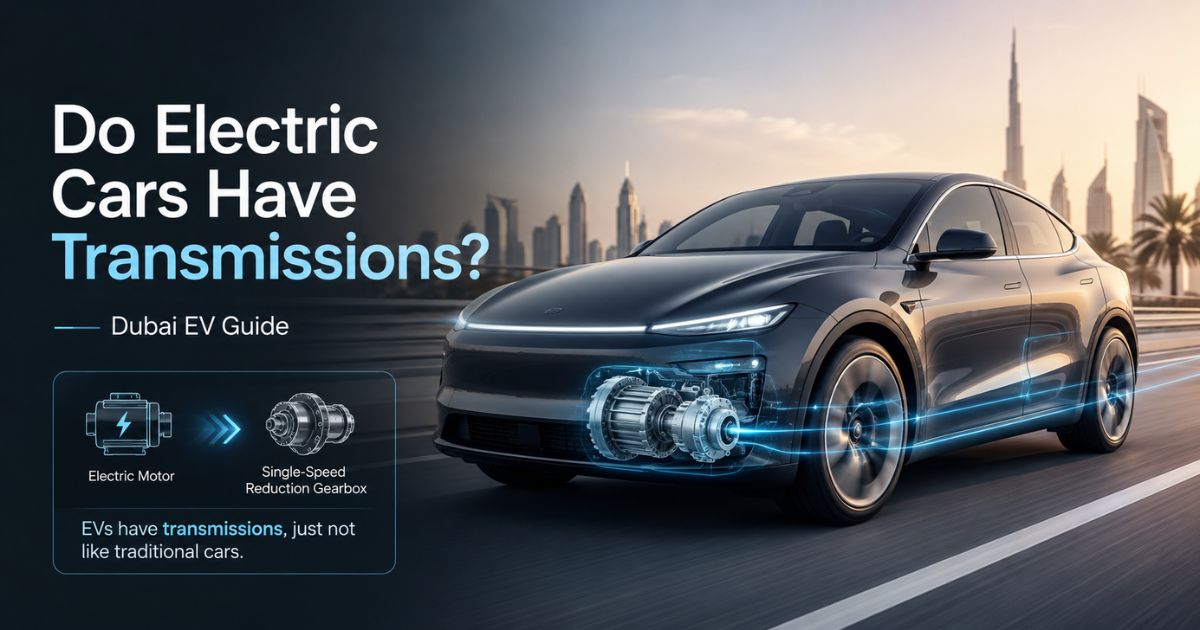
Key Takeaways
What Transmission Does an EV Have?
Why Do EVs Need Only One Gear?
What Does the Reduction Gear Do?
EV vs Petrol Car Transmission
Do Electric Cars Have Gears?
How Does Reverse Work in an EV?
Do Any EVs Have Two Speeds?
Why Not Give Every EV More Gears?
Are Electric Cars Automatic?
Do Hybrid Cars Have Transmissions?
Do EV Transmissions Need Fluid?
Can an EV Transmission Fail?
What Are EV Transmission Warning Signs?
Does an EV Have a Clutch?
Do EVs Need Transmission Maintenance?
EV Transmission Care in Dubai
Frequently Asked Questions
Question: Do Tesla Cars Have Transmissions?
Question: How Many Gears Does an Electric Car Have?
Question: Why Don't Electric Cars Shift Gears?
Question: Do Electric Cars Have Gearboxes?
Question: Do Electric Cars Have Reverse Gear?
Question: Do Electric Cars Need Transmission Fluid?
Question: Are EV Transmissions Maintenance-Free?
Question: Can Electric Car Transmissions Be Repaired?
Conclusion
Need EV Drivetrain Diagnostics in Dubai?