How Do You Check Transmission Fluid in a Car?
Published
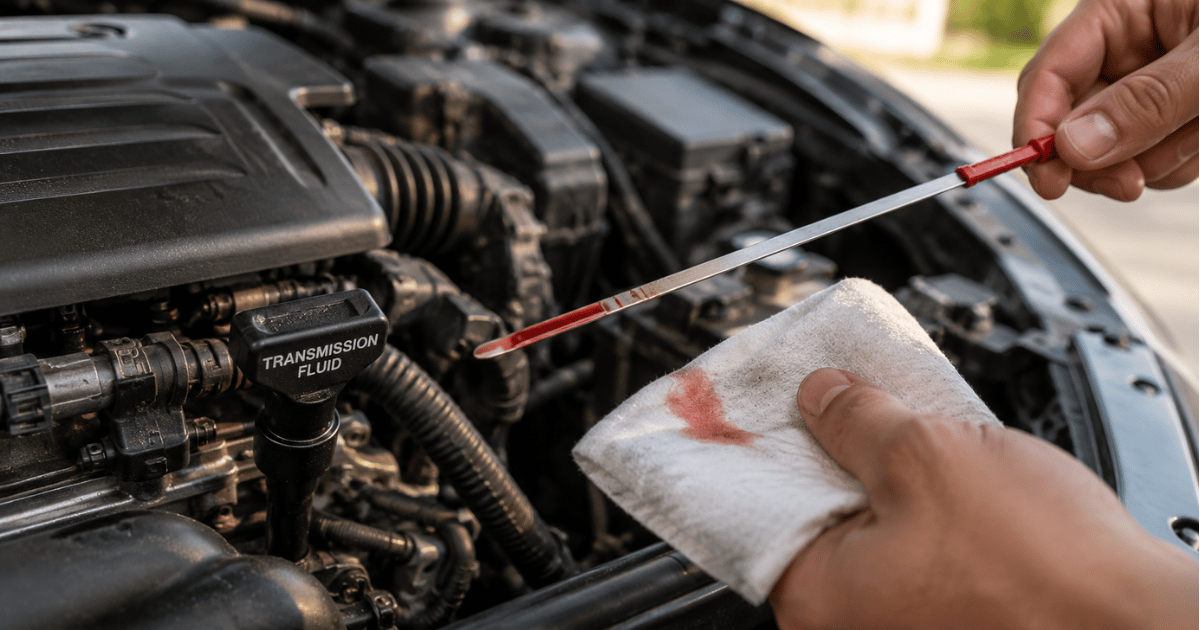
How do you check transmission fluid in a car? On dipstick-equipped automatics, park on level ground, follow the specified temperature procedure, remove the transmission dipstick, wipe it clean, reinsert it fully, then read the level and condition using the correct HOT or COLD marks.
The exact procedure matters because transmission fluid expands as its temperature changes. Too little or too much fluid can affect lubrication, cooling, hydraulic operation, and shifting. A NHTSA-hosted vehicle manual specifically warns that both overfilling and underfilling can damage a transmission.
At Caroto Repair Dubai in Jumeirah 1, transmission inspections include fluid checks, leak inspection, diagnostics, and shift-quality assessment. This guide covers dipstick checks, sealed transmissions, fluid condition, common warning signs, and when Dubai drivers need professional help.
Key Takeaways
Check the owner's manual before touching the transmission.
Keep the vehicle on level ground.
Follow the manufacturer's fluid-temperature procedure.
Check both fluid level and condition.
Never add an unapproved transmission fluid.
Avoid overfilling the transmission.
Many newer cars have no traditional dipstick.
Sealed transmissions may require specialist equipment.
Repeatedly low fluid usually indicates a leak.
What Does Transmission Fluid Do?
Transmission fluid lubricates moving transmission components and helps control heat. In many automatic transmissions, it also supports the hydraulic pressure needed for clutch operation and gear changes. The correct level is therefore important. Low fluid can contribute to poor lubrication, excessive heat, delayed engagement, and slipping.
However, not every gearbox uses the same fluid or checking method. Conventional automatic transmissions, CVTs, dual-clutch systems, and manual gearboxes can have very different requirements.
Caroto's guide explaining what a transmission problem in a car means covers slipping, delayed shifting, leaks, warning lights, and other gearbox symptoms in more detail.
How Do You Check Transmission Fluid in a Car?
A dipstick-equipped automatic transmission can generally be checked in seven steps. However, your manufacturer's procedure always takes priority over generic instructions.
1. Check the Owner's Manual
First, identify the transmission type and approved fluid specification.
The manual should also tell you:
Whether the engine should run
Required fluid temperature
Correct selector position
Dipstick location
Approved fluid type
Correct level marks
Some vehicles need the transmission at normal operating temperature. Others use a different procedure. Never assume one method applies to every automatic transmission.
2. Park on Level Ground
Park on a firm, flat surface and apply the parking brake. A tilted vehicle can produce an inaccurate fluid reading. This becomes particularly important when the acceptable level range is narrow.
Keep loose clothing and hands away from moving belts or cooling fans when the manufacturer requires the engine to remain running.
3. Reach the Correct Temperature
Bring the transmission fluid to the temperature specified by the manufacturer. This does not always mean driving until everything becomes very hot. Heavy traffic, extended high-speed driving, towing, or extreme outside temperatures can raise fluid temperature beyond the preferred checking range.
The NHTSA-hosted guidance shows how operating temperature affects an automatic transmission fluid reading. It also advises waiting after demanding hot-weather driving before performing certain checks.
4. Cycle Through the Gears
Some automatic transmissions require you to move the selector through each position before checking the fluid. Keep your foot firmly on the brake. Pause briefly in each position according to the vehicle's procedure. Then return the selector to the specified checking position, commonly Park or Neutral.
This process helps circulate fluid through the transmission's hydraulic circuits before the reading.
5. Clean the Dipstick
Find the transmission dipstick and make sure you have not confused it with the engine-oil dipstick. Remove the dipstick and wipe it clean using a lint-free cloth. Insert it completely again. Then pull it out once more to obtain the reading.
Do not force a dipstick or cap that you cannot identify correctly.
6. Read the Fluid Level
Check where the fluid sits against the marks on the dipstick.
Common markings include:
HOT
COLD
MIN
MAX
ADD
FULL
Crosshatched safe range
Use the range that matches the manufacturer's specified checking conditions. When fluid is low and the vehicle allows owner top-ups, add only the approved fluid. Add a small amount at a time and recheck.
Do not overfill. Too much fluid can also interfere with proper transmission operation.
7. Check Fluid Condition
Fluid level is only part of the inspection. Look at its appearance and note any unusual smell. Many automatic transmission fluids start red or amber, but formulations vary.
Warning signs can include:
Strong burnt smell
Very dark fluid
Visible metal or debris
Foaming
Milky or cloudy appearance
Unusually low level
Do not diagnose transmission health from colour alone. Fluid specification, vehicle mileage, operating conditions, shifting behaviour, and manufacturer recommendations all provide useful context.
Check Transmission Fluid Hot or Cold?
Transmission fluid may need to be checked hot, warm, or under another specified condition depending on the vehicle. There is no universal rule for every transmission. Many traditional automatic transmissions use an operating-temperature reading. Some dipsticks provide separate COLD and HOT ranges.
Toyota transmission fluid guidance also stresses that fluid-checking procedures differ between vehicles. It recommends consulting the owner's manual rather than applying one generic method.
For Dubai drivers, this matters because summer traffic can produce high drivetrain temperatures. Do not assume an extremely hot transmission provides the most accurate reading.
What If There Is No Dipstick?
A transmission without a dipstick normally requires a model-specific level-check procedure. Many modern vehicles use a fill or level plug underneath the transmission instead.
A professional check may require:
Keeping the vehicle perfectly level.
Monitoring transmission fluid temperature.
Safely raising the vehicle.
Locating the correct level plug.
Checking fluid flow at the specified temperature.
Adding approved fluid when required.
Inspecting the system for leaks.
Some transmissions also require scan-tool data during the procedure. Removing an unidentified plug can accidentally drain transmission fluid. An incorrect temperature can also produce the wrong fill level.
Manual transmissions often use another process entirely. Caroto's guide on how to check gear oil in a car explains the filler-level method commonly used on manual gearboxes.
What Does Low Transmission Fluid Feel Like?
Low transmission fluid can cause delayed engagement, slipping, rough shifting, unusual noises, or overheating. However, electronic and mechanical faults can produce similar symptoms.
Common warning signs include:
Delay when selecting Drive or Reverse
Slipping gears
Rough or jerky shifts
Shuddering
Whining or humming sounds
Burning smell
Fluid beneath the car
Transmission warning light
A low transmission-fluid level also raises another question: where did the fluid go? Possible leak points include seals, cooler lines, transmission pans, gaskets, and plugs. Repeatedly topping up the transmission without fixing a leak is not a proper repair.
Transmission Fluid vs Gear Oil
Transmission fluid and gear oil should not be treated as interchangeable products.
Use the exact specification approved for the transmission. Electric vehicles are another example of why terminology matters. Caroto's Do Electric Cars Have Transmissions? guide explains how most EVs use reduction gearing instead of a conventional multi-speed automatic transmission.
Can You Add Transmission Fluid Yourself?
You can add transmission fluid yourself when the manufacturer provides an owner-level procedure and you know the exact fluid specification.
Never select fluid simply because the container says it works with automatic transmissions. The wrong fluid can affect friction characteristics, shifting behaviour, and lubrication.
Add only small amounts. Recheck after each addition.
Stop when you cannot confidently identify:
The correct fluid
The fill point
The required temperature
The correct level
A sealed transmission is usually better handled by a workshop.
Transmission Fluid Checks in Dubai
Dubai's heat, long idling periods, and stop-start traffic can increase thermal demand on transmission systems. Correct fluid level and leak repair are therefore especially important. That does not mean switching to a different transmission fluid because Dubai is hot. Use the exact specification approved by the vehicle manufacturer.
Drivers around Jumeirah 1 and wider Dubai should arrange a transmission inspection when they notice fluid leaks, burnt smells, delayed engagement, slipping, or warning messages.
At Caroto Repair Dubai, thegearbox and transmission service in Dubai includes fluid-condition inspection, leak checks, diagnosis, and shift-quality assessment. The service covers automatic and manual transmissions and related gearbox faults.
When a warning light or shifting problem may have an electronic cause,car computer diagnostics in Dubai can help identify stored transmission-control faults before unnecessary repairs begin.
When Should a Mechanic Check It?
Professional inspection is appropriate when a fluid check becomes uncertain or the transmission already shows symptoms.
Book a transmission inspection when:
Your car has no transmission dipstick.
Fluid level repeatedly falls.
The fluid smells burnt.
Visible particles appear in the fluid.
You find a transmission leak.
Gears slip or jerk.
Drive or Reverse engages slowly.
A transmission warning appears.
You cannot identify the correct fluid.
A temperature-controlled check is required.
A transmission problem can involve fluid, seals, sensors, solenoids, clutches, electronic controls, or internal mechanical components. Checking the fluid is useful, but it does not replace proper diagnosis.
Frequently Asked Questions
Where Is the Transmission Fluid Dipstick?
The transmission dipstick is usually inside the engine bay on vehicles designed with one. Its exact location varies by make, model, and drivetrain. Many newer cars have no accessible transmission dipstick.
Should the Engine Be Running?
Some automatic transmissions require the engine to idle while checking fluid, while others use a different procedure. Follow the manufacturer's instructions for your exact vehicle.
What Colour Should Transmission Fluid Be?
Many new automatic transmission fluids are red or amber, but colour varies between formulations. Very dark, burnt-smelling, milky, or visibly contaminated fluid should be inspected further.
Can Low Transmission Fluid Cause Slipping?
Yes. Low fluid can reduce lubrication and hydraulic pressure in compatible automatic transmissions, which may contribute to slipping. Internal wear or electronic problems can create similar symptoms.
What Happens If I Overfill Transmission Fluid?
Too much transmission fluid can cause foaming, aeration, leakage, and poor transmission operation. Follow the specified checking method and add fluid gradually.
How Often Should I Check Transmission Fluid?
Follow your vehicle's maintenance schedule and manufacturer guidance. Check sooner when you notice leakage, unusual shifts, overheating, burnt smells, or transmission warnings.
Can I Check a Sealed Transmission Myself?
Many sealed transmissions are not suitable for a simple DIY fluid check. They may require safe lifting, precise fluid-temperature monitoring, special tools, or scan equipment.
Final Thoughts
How do you check transmission fluid in a car? Start with the manufacturer's instructions. For dipstick-equipped automatic transmissions, keep the vehicle level, reach the required fluid temperature, clean and reinsert the dipstick, then check the level and condition. Do not assume every transmission uses the same procedure. Many modern sealed transmissions require an underbody level plug and temperature-specific checking process.
A low reading also deserves further investigation. Transmission fluid should not repeatedly disappear without a leak or another problem.
Need a Transmission Check in Dubai?
At Caroto Repair Dubai, we inspect transmission fluid condition, leaks, delayed shifting, slipping, warning lights, and other gearbox problems. Visit us at 67M8+FHQ, Jumeirah 1, Jumeirah, Dubai, United Arab Emirates. Caroto's live contact information also lists the workshop as available 24/7.
Call +971 56 858 7348 or get directions throughCaroto Repair Dubai on Google Maps.