How to Cool Down Engine
Published
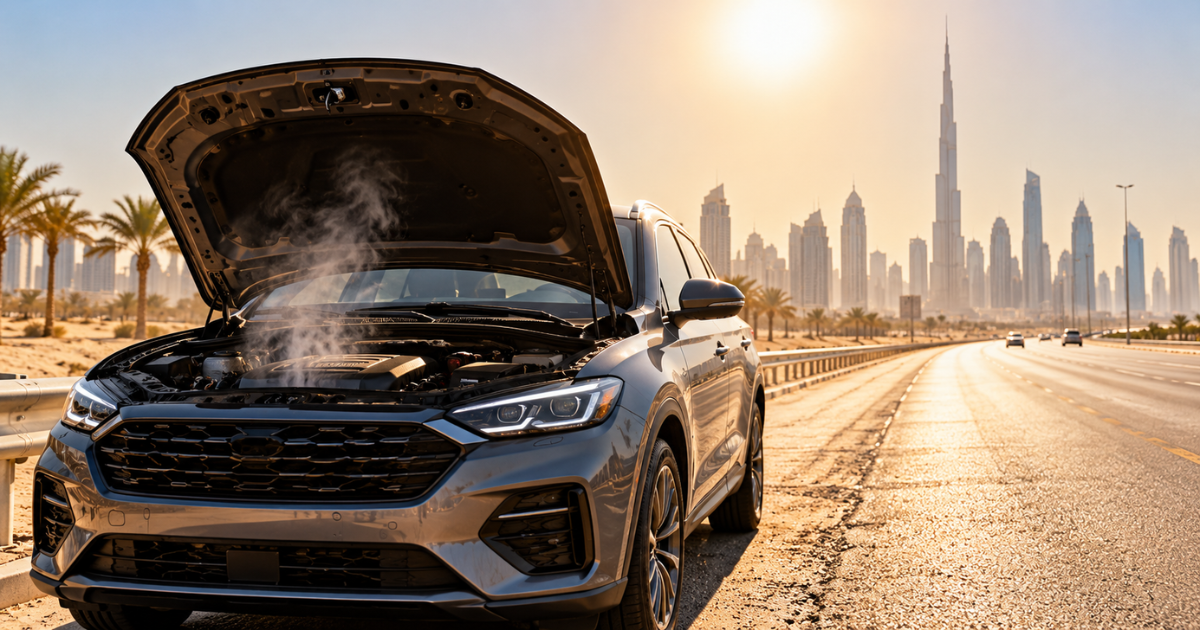
How to cool down engine safely: turn off the AC, pull over, switch off the engine, and wait until the cooling system is no longer hot or pressurized before checking coolant. Never remove a hot radiator cap. If the temperature rises again after restarting, stop driving and have the cooling system inspected.
At Caroto Repair Dubai in Jumeirah 1, our technicians handle overheating, coolant leaks, radiator faults, water-pump problems, and related engine issues. Dubai heat can expose a weak cooling system quickly, especially in traffic.
This guide explains the safest cool-down process, common causes, mistakes to avoid, and when professional repair is needed.
Key Takeaways
Turn off the AC when the temperature gauge climbs.
Pull over safely and switch off the engine.
Never open a hot radiator or pressurized coolant cap.
Let the engine cool naturally before checking coolant.
Do not pour cold water over a hot engine.
Stop driving if the engine overheats again.
Repeated overheating needs diagnosis, not repeated top-ups.
How to Cool Down Engine Safely
The safest way to cool an overheating engine is to reduce load, stop driving, and let heat escape naturally. Follow these seven steps instead of forcing the temperature down.
1. Turn Off the AC
Switch off the air conditioning when the temperature gauge starts climbing. The AC compressor adds load to the engine on many vehicles.
If you cannot stop immediately, turn the cabin heater to maximum briefly. Use this only while reaching a safe stopping place.
2. Pull Over Safely
Move out of traffic as soon as conditions allow. Use hazard lights and choose a safe shoulder, parking area, or side road.
Do not continue driving because the engine still sounds normal. A temperature warning means the cooling system may no longer control heat correctly.
3. Switch Off the Engine
Once safely parked, switch off the engine. This stops combustion from adding more heat.
4. Let the Engine Cool
Do not rely on a fixed timer alone. Wait until the engine and cooling system are genuinely cool before opening any pressurized cap.
The U.S. Federal Highway Administration warns against opening a hot pressurized cooling system because steam and boiling coolant can cause severe burns.
5. Check the Coolant Level
After cooling, inspect the coolant reservoir. Compare the level with the MIN and MAX marks where fitted.
Use only the coolant specification recommended by the manufacturer. Do not select coolant by colour alone.
6. Inspect for Leaks
Look beneath the vehicle and around visible cooling-system parts.
Check for:
Coolant puddles
Wet hose connections
Split or swollen hoses
Steam residue
An empty reservoir
Radiator damage
Loose or damaged belts
A leak means topping up coolant may only provide temporary relief.
7. Restart and Monitor
Restart only after the engine has cooled and no major leak is visible. Watch the temperature gauge closely.
If the gauge climbs again, switch off the engine and stop driving. Arrange inspection or recovery instead.
How Long Does an Engine Take to Cool?
There is no single safe cool-down time for every vehicle. Engine size, outside temperature, airflow, coolant temperature, and overheating severity all affect cooling.
Do not open a radiator cap simply because a set number of minutes has passed.
The Federal Highway Administration advises waiting until the engine cools before opening a pressurized system. A radiator cap cool enough to touch with bare hands is one practical indication that the system has cooled significantly.
What Should You Never Do?
Several common reactions can make overheating more dangerous or expensive.
Never Open a Hot Radiator Cap
Hot coolant can remain under pressure after the engine stops. Removing the cap can release steam and boiling liquid.
Wait until the system has cooled and follow the manufacturer's procedure.
Never Pour Cold Water on the Engine
Do not pour cold water over a hot engine block, cylinder head, or radiator. Rapid cooling can place unnecessary thermal stress on hot components.
It also does nothing to repair the fault causing the overheating.
Never Keep Driving in the Red Zone
Continuing to drive while the temperature remains in the red zone can cause major engine damage.
Severe overheating can contribute to head-gasket failure, cylinder-head distortion, and other internal damage.
Never Keep Topping Up Coolant
Repeated coolant loss usually has a cause. A leak or internal engine problem may need repair.
Why Is My Engine Overheating?
An engine overheats when the cooling system cannot remove heat fast enough. Low coolant, poor circulation, weak airflow, or internal faults are common causes.
Caroto's guide tohow an engine cooling system works explains how the radiator, thermostat, water pump, coolant, and fan work together.
Low engine oil can also increase friction and heat. Caroto'show to check oil level in a car guide explains the correct dipstick process.
Can You Add Coolant to a Hot Engine?
No. Do not open a hot pressurized cooling system to add coolant. Let the engine cool first, then follow the owner's manual for checking and topping up.
The Federal Highway Administration specifically warns against opening a pressurized cooling system while hot. If coolant is low after cooling, add only the correct type and mixture.
A level that falls again needs diagnosis. A radiator, hose, water pump, reservoir, or internal engine fault may be responsible.
Does the Heater Cool the Engine?
The cabin heater can remove some heat from engine coolant, but it is only a temporary emergency measure. It may help while moving to a safe stopping place.
The heater core acts like a small radiator. Hot coolant passes through it, and the cabin fan releases some of that heat.
Do not use this method to continue a long journey.
Engine Overheating in Dubai
Dubai conditions can expose cooling-system weaknesses quickly. High temperatures, slow traffic, idling, and continuous AC use increase thermal demand.
A healthy cooling system should still control engine temperature during normal driving. Repeated overheating should not be treated as normal Dubai weather.
The U.S. National Highway Traffic Safety Administration recommends checking coolant, cooling-system components, belts, and hoses before hot-weather travel. It also notes that summer heat can accelerate rubber belt and hose deterioration.
For Dubai driving, check:
Coolant level and condition
Radiator condition
Cooling-fan operation
Water-pump leaks
Hose condition
Engine oil level
Temperature warnings
Drivers around Jumeirah 1 and wider Dubai who notice repeated overheating should investigate the cause before another long journey.
Caroto Repair Dubai'sgeneral car repair in Dubai service includes radiator and cooling-system work alongside routine inspection.
For unclear temperature warnings,car computer diagnostics in Dubai can help identify sensor or control-system faults.
Can Low Oil Cause Overheating?
Low engine oil can contribute to higher engine temperatures because oil reduces friction and carries heat away from moving parts. However, overheating may still have a separate cooling-system cause.
Check oil on level ground using the manufacturer's procedure. Caroto'show to change engine oil in a car guide covers oil selection, draining, refilling, and final level checks.
Never treat an oil top-up as a substitute for diagnosing repeated overheating.
When Does Overheating Need Repair?
Repeated overheating needs professional diagnosis because cooling the engine only manages the immediate temperature problem. It does not fix the failed component.
Arrange an inspection when:
The engine overheats again after restarting.
Coolant keeps disappearing.
Steam comes from under the hood.
The cooling fan does not run.
Coolant leaks under the car.
White exhaust smoke appears.
Engine oil looks milky.
The engine loses power.
Warning lights remain on.
Caroto Repair Dubai'sengine repair in Dubai service includes cooling and lubrication system repair, including radiator and water-pump work. The workshop also provides engine diagnostics for overheating-related faults.
Frequently Asked Questions
How do I cool my engine quickly?
Turn off the AC, pull over safely, switch off the engine, and let it cool naturally. Never open the radiator cap while hot. After cooling, check coolant and visible leaks before restarting.
How long should I wait before opening the radiator cap?
Do not use time alone as the safety test. Wait until the cooling system is fully cool and no longer pressurized. Opening a hot radiator cap can release steam and boiling coolant.
Can I drive after my engine cools down?
You may restart after cooling if no major leak is visible. Watch the gauge closely. If the temperature rises again, stop driving and arrange repair or recovery.
Does turning off the AC help overheating?
Yes. Turning off the AC can reduce engine load on many vehicles. It may slow the temperature rise while you find a safe place to stop.
Can I use water instead of coolant?
Use the coolant and mixture specified by the manufacturer. Plain water does not provide the same boiling, freezing, and corrosion protection during normal use.
Why does my car overheat in traffic?
Overheating mainly in slow traffic can indicate weak radiator airflow or a failed cooling fan. Low coolant, thermostat faults, and radiator problems can cause similar symptoms.
Why does my car overheat with full coolant?
A full reservoir does not prove the system is healthy. A stuck thermostat, weak water pump, blocked radiator, failed fan, trapped air, or internal fault can still cause overheating.
Need Engine Overheating Repair in Dubai?
How to cool down engine safely comes down to four priorities: reduce the load, stop safely, switch off the engine, and wait until the cooling system is cool before checking it. Never open a hot radiator cap or keep driving in the red zone.
After cooling, check coolant, visible leaks, hoses, and warning signs. If the temperature rises again, the vehicle needs diagnosis rather than another temporary cool-down. For Dubai drivers, early cooling-system maintenance matters because high ambient temperatures can expose weak components quickly.
At Caroto Repair Dubai, we inspect recurring overheating, coolant leaks, temperature warnings, radiator faults, and other cooling-system problems.
Visit us at 67M8+FHQ, Jumeirah 1, Jumeirah, Dubai, United Arab Emirates. Call +971 56 858 7348 or get directions throughCaroto Repair Dubai on Google Maps.