How Long Does It Take For Engine To Cool Down?
Published
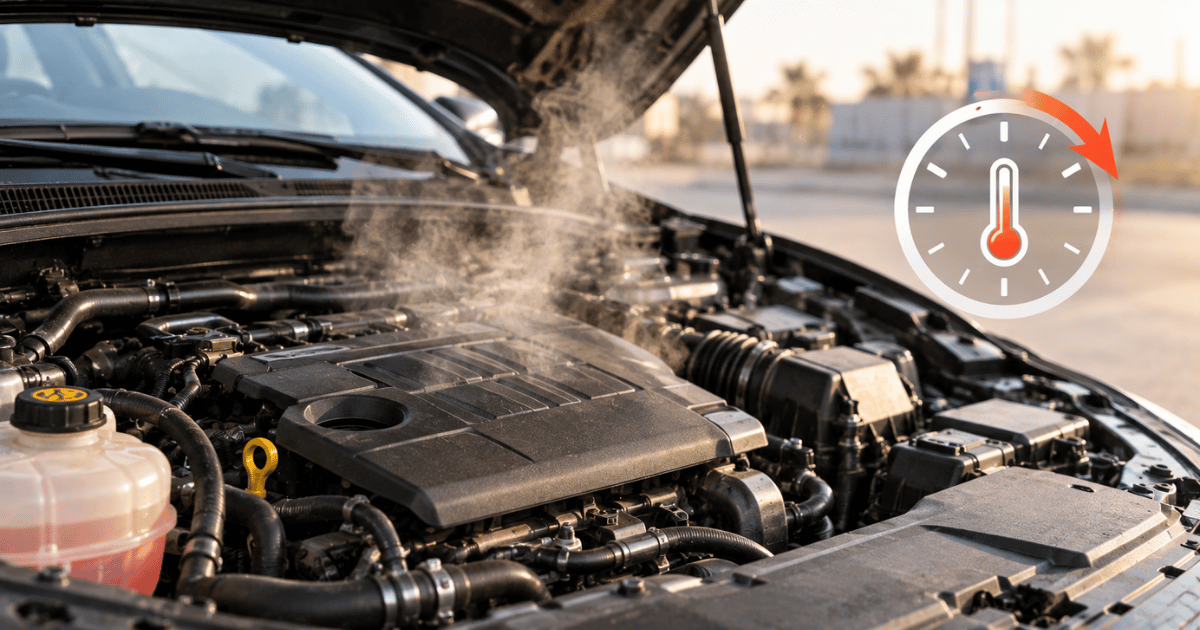
How long does it take for engine to cool down? After overheating, allow at least 30 minutes before basic under-bonnet inspection, and expect a complete cool-down to take much longer. Never open a radiator cap based only on time. Wait until the pressurized cooling system is genuinely cool and safe to touch. At Caroto Repair Dubai in Jumeirah 1, we inspect overheating vehicles for coolant leaks, radiator faults, thermostats, water pumps, cooling fans, and related engine problems. Dubai's high ambient temperatures can slow natural heat loss, so an engine may stay hot longer than expected. This guide explains realistic waiting times, what affects cooling speed, when different checks are safe, and when overheating requires professional repair. Wait at least 30 minutes before inspecting an overheated engine closely. Complete cooling can take an hour or considerably longer. Never use time alone to decide when opening a radiator cap. A recently driven healthy engine cools differently from an overheated engine. Large, turbocharged, and heavily loaded engines may retain heat longer. Dubai's high ambient temperatures can slow engine cooling. Opening a hot pressurized cooling system can cause severe burns. Repeated overheating indicates a fault that needs diagnosis. A car engine can remain hot for 30 minutes to several hours, depending on how hot it became and the surrounding conditions. The temperature does not drop evenly after you switch the engine off. A normally driven vehicle may become comfortable enough for basic checks sooner than an engine that reached the red zone. For an overheated vehicle, AAA recommends waiting at least 30 minutes before opening the hood for inspection. It also advises allowing the engine to cool before checking coolant. However, 30 minutes should not be treated as permission to remove the radiator cap. Different tasks require different levels of cooling. This is why one universal waiting time can be misleading. These are safety guidelines rather than exact manufacturer specifications.mAlways follow the owner's manual for your vehicle. An engine stores large amounts of heat in metal, coolant, oil, exhaust components, and surrounding parts. Switching off the engine stops combustion, but it does not instantly remove stored heat. After shutdown, heat continues moving between: Cylinder head Engine block Coolant Engine oil Turbocharger Exhaust manifold Radiator Engine-bay components Some areas can even become temporarily hotter after shutdown because coolant and airflow are no longer moving normally. This effect is often called heat soak. Therefore, a hood that feels cooler does not automatically mean the entire cooling system has depressurized. Engine cooling time changes with vehicle design, engine condition, weather, and how the car was driven. Higher ambient temperature reduces the temperature difference between the engine and surrounding air. This makes natural heat transfer slower. In Dubai, an engine parked after afternoon driving may therefore stay hot longer than the same vehicle on a mild day. Large engines contain more metal, oil, and coolant than smaller engines. More thermal mass can mean more stored heat after shutdown. A large V6 or V8 may therefore cool differently from a compact four-cylinder engine. Turbochargers operate at very high temperatures because exhaust gases pass directly through the turbine housing. Modern vehicles manage this heat through oil, coolant, shielding, and electronic controls. After hard driving, turbocharged engine bays may retain substantial heat. An engine may need longer to cool after: High-speed driving Heavy acceleration Towing Mountain driving Long idling Stop-start traffic Severe overheating A short, easy journey places less thermal load on the engine. A healthy cooling system controls heat more effectively. Low coolant, a blocked radiator, failed fan, weak water pump, or faulty thermostat can cause abnormal temperatures. Caroto's guide tohow an engine cooling system works explains how these parts work together to regulate engine temperature. After an engine overheats, allow at least 30 minutes before close inspection and longer before opening any pressurized cooling-system component. Severe overheating may require considerably more cooling time. The safest decision depends on temperature and pressure rather than the clock. The U.S. Federal Highway Administration states that it is never safe to remove a radiator cap or open a pressurized cooling system until it has cooled. Steam and boiling coolant can escape and cause serious burns. The same guidance notes that a radiator cap cool enough to touch with bare hands is one indication that the engine has cooled significantly. Always use your vehicle manufacturer's procedure first. Open a radiator cap only when the engine and pressurized cooling system are fully cool. Do not assume 20, 30, or 60 minutes automatically makes it safe. Hot coolant expands and creates pressure inside the system. Removing the cap while pressure remains can release hot coolant and steam. Never rush this process because you want to add coolant quickly. If the vehicle has overheated badly, professional roadside assistance may be safer than opening the cooling system yourself. Wait until the cooling system is cool enough to inspect safely. Many modern vehicles use a translucent expansion reservoir with MIN and MAX markings. However, reservoir designs differ. Never assume every coolant tank is unpressurized. Check the owner's manual before removing any coolant-system cap. A coolant level that repeatedly falls can indicate: Radiator leak Damaged hose Water-pump leak Failed cap Heater-core leak Internal engine leak Repeated topping up does not repair the underlying fault. Engine oil normally needs a short settling period rather than a complete engine cool-down. The exact checking procedure depends on the vehicle. Some manufacturers specify checking oil a few minutes after shutdown, while others recommend checking when cold. Keep the vehicle on level ground. Caroto's guide onhow to check oil level in a car explains the dipstick process and why an accurate reading matters. For oil servicing, theengine oil change guide also explains why an engine should be warm but not dangerously hot before draining oil. Opening the hood can allow heat to escape from the engine bay after the vehicle has stopped. However, use caution when steam, coolant, or smoke is present. Do not put your face or hands directly over the hood gap when the engine has severely overheated. If there is heavy steam, fire risk, or leaking fluid, move to a safe distance and arrange assistance. You should not try to force a hot engine to cool rapidly. The safest approach is to stop the source of heat and allow normal cooling. Avoid: Pouring cold water over the engine Spraying the radiator with very cold water Opening a hot radiator cap Continuing to drive for airflow Adding coolant through a pressurized opening Sudden external cooling does not repair the overheating problem. It can also expose you to hot fluids and moving components. An engine overheats when its cooling system cannot remove heat at the required rate. Common causes include: Low coolant Coolant leaks Failed thermostat Weak water pump Blocked radiator Cooling-fan failure Damaged hoses Head-gasket problems Low engine oil Caroto's article onwhat happens when engine oil is not changed explains how degraded lubrication can increase friction and heat. One overheating event does not always mean internal engine damage. Repeated or severe overheating deserves immediate diagnosis. Engines can remain hot longer in Dubai because high ambient temperatures reduce the difference between engine temperature and outside air. Traffic, extended AC use, idling, and summer heat can further increase thermal demand. Dubai drivers should pay particular attention to: Coolant level Cooling fans Radiator airflow Water pump condition Thermostat operation Hose condition Engine oil level High outside temperature alone should not make a healthy car repeatedly overheat. If the temperature gauge repeatedly climbs in traffic or after highway driving, the vehicle may have a cooling-system fault. At Caroto Repair Dubai in Jumeirah 1, overheating diagnosis can include radiator checks, coolant inspection, cooling-fan testing, thermostat assessment, and water-pump inspection. Theengine repair service in Dubai specifically covers cooling and lubrication system problems. The engine is safe to work on only when the specific component you need to touch has cooled sufficiently. A single temperature reading cannot cover every part. For example: An engine cover may cool quickly. Exhaust components can remain extremely hot. Coolant can remain pressurized. Turbo components can retain heat. Oil may remain hot inside the sump. Wear suitable gloves and follow the repair procedure for the exact component. For deeper mechanical work, allow additional cooling rather than working against the clock. An engine that overheats again after cooling needs diagnosis. Cooling it down treats the immediate temperature, not the mechanical cause. Book an inspection when you notice: Repeated temperature warnings Coolant loss Steam under the hood Coolant puddles Cooling fan failure Rough running after overheating White exhaust smoke Milky engine oil Power loss Unusual knocking or ticking For warning lights or unclear temperature readings, Caroto'scar computer diagnostics in Dubai can help identify stored faults and abnormal sensor data. Wait at least 30 minutes before closely inspecting an overheated engine. Full cooling can take much longer. Never remove a radiator cap until the pressurized system is completely cool, regardless of how much time has passed. An engine may cool enough for a basic inspection within 30 minutes, but it may still contain very hot coolant and components. Thirty minutes does not guarantee that opening the radiator cap is safe. A fully hot engine can take an hour or several hours to approach outside temperature. Engine size, ambient temperature, airflow, driving load, and overheating severity all affect the cooling time. Opening the hood can improve natural airflow around the engine bay after shutdown. However, do not approach heavy steam, leaking coolant, or a possible fire simply to open the hood. Only add coolant when the applicable cooling-system opening is safe and the manufacturer's procedure allows it. Do not use 30 minutes as an automatic radiator-cap rule because the system may still be hot and pressurized. An engine can remain warm for hours because the metal, coolant, oil, exhaust, and surrounding components store substantial heat. Dubai's high ambient temperatures can slow that heat loss further. Restart only when the engine has cooled and no serious leak is visible. Monitor the temperature immediately. Stop driving if the temperature starts climbing again. How long does it take for engine to cool down? Allow at least 30 minutes before basic inspection after overheating, but expect complete cooling to take considerably longer. More importantly, do not rely on time alone. Coolant temperature, system pressure, engine design, driving conditions, and Dubai's outside temperature all affect how quickly an engine cools. Never open a hot radiator cap. If the vehicle overheats again after restarting, arrange a proper cooling-system inspection instead of repeatedly waiting for it to cool. At Caroto Repair Dubai, we inspect overheating engines, coolant leaks, radiators, thermostats, water pumps, cooling fans, and related engine faults. Visit us at 67M8+FHQ, Jumeirah 1, Jumeirah, Dubai, United Arab Emirates. Call +971 56 858 7348 or get directions throughCaroto Repair Dubai on Google Maps.Key Takeaways
How Long Does an Engine Stay Hot?
Engine Cool-Down Times by Situation
Why Does Engine Cooling Take So Long?
What Affects Engine Cool-Down Time?
Outside Temperature
Engine Size
Turbochargers
Driving Conditions
Cooling-System Condition
How Long After Overheating?
When Can You Open the Radiator Cap?
How Long Before Checking Coolant?
How Long Before Checking Engine Oil?
Should You Open the Hood?
Can You Cool an Engine Faster?
Why Does an Engine Overheat?
Engine Cool-Down Time in Dubai
When Is the Engine Safe to Work On?
When Does Overheating Need Repair?
Frequently Asked Questions
How long should I wait for my engine to cool?
Can an engine cool down in 30 minutes?
How long does a fully hot engine take to cool?
Does an engine cool faster with the hood open?
Can I add coolant after 30 minutes?
Why is my engine still hot after an hour?
Can I drive once the engine cools?
Engine Overheating in Dubai?